Cheti Chand: How the Sindhi New Year Carries a 5,000-Year-Old Promise of Water and Hope
Cheti Chand marks the Sindhi New Year and the birth of Jhulelal. Inside the Baharana procession, the sacred water ritual, and why a borderless people still gather at the river.
Every spring, we gather around water. Not only to remember where we came from, but to remember what carried us forward.
Cheti Chand marks the Sindhi New Year and the birth anniversary of Jhulelal, the revered patron saint of Sindhis. It arrives on the first day of the Sindhi month of Chet, usually in March or April, and fills homes, temples, streets, and riverbanks with song.
Movement I · The New Year Rises
For more than 5,000 years, the story of Sindh has been shaped by water. The Indus gave its name to our civilization. It fed fields, connected cities, and carried memory across generations. Today Sindhis live across 100+ countries, separated by oceans, passports, and time zones. Still, when Cheti Chand arrives, we turn toward the same elemental truth: water remembers.
Explore the Ancient Origins of Sindhi history →
Movement II · Jhulelal and the River
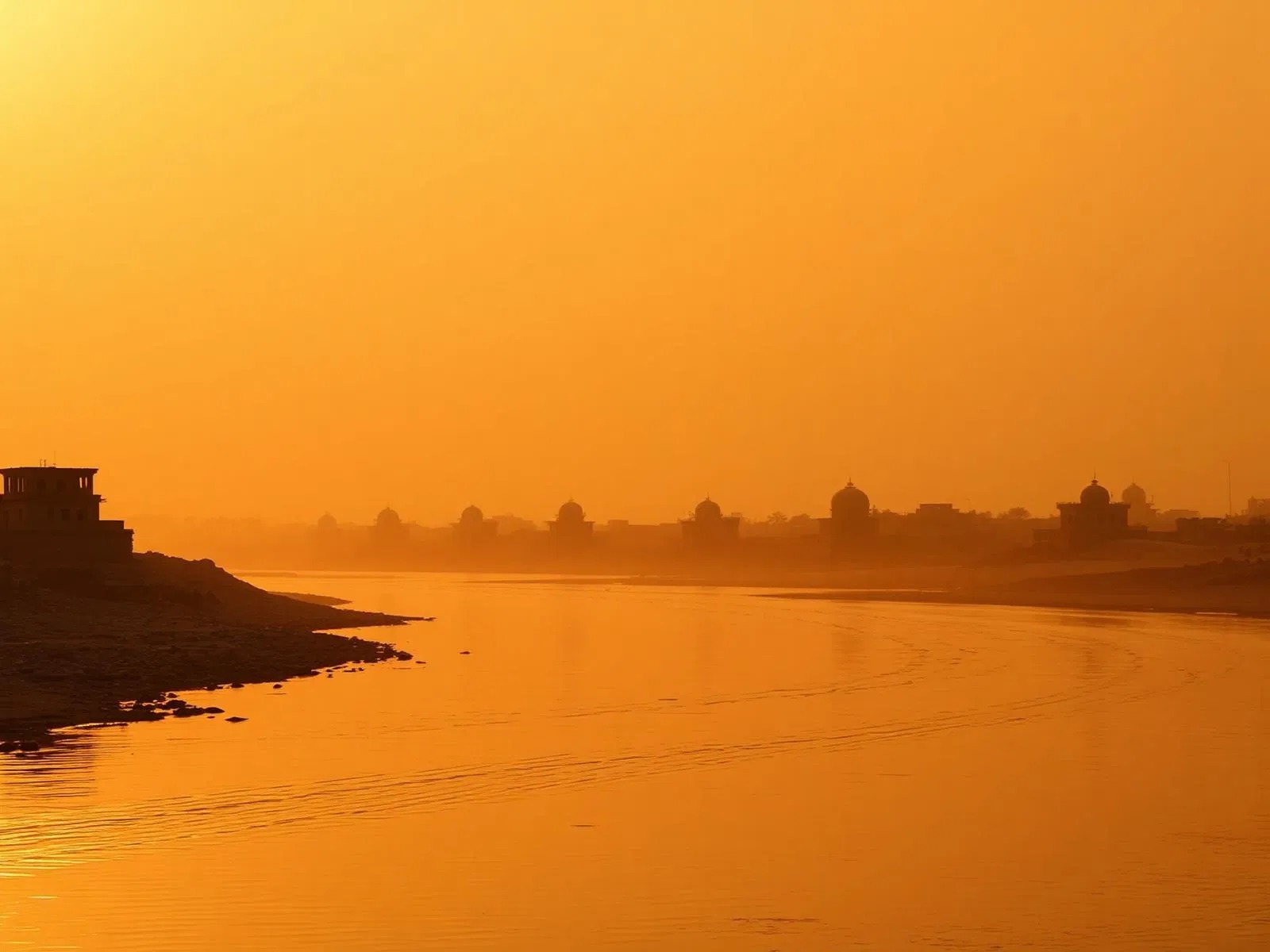
Jhulelal is known by many names: Uderolal, Zinda Pir, Lal Sai. The traditional story tells of a time when Sindhi Hindus faced religious persecution under a ruler who demanded conversion. The community prayed to Varun Dev for 40 days. On the first day of Chet, a child was believed to appear by the river: Jhulelal.
Whether held as sacred history, devotional legend, or inherited memory, the story carries its meaning clearly. A people prayed. A protector emerged. Hope took human form.
Cheti Chand is more than a calendar date. It is the yearly return of a promise: that faith can outlast fear, that identity can survive upheaval, that a community can carry its homeland even after the homeland has been taken from it. We do not celebrate because the past was easy. We celebrate because it did not end us.
Movement III · The Baharana Procession
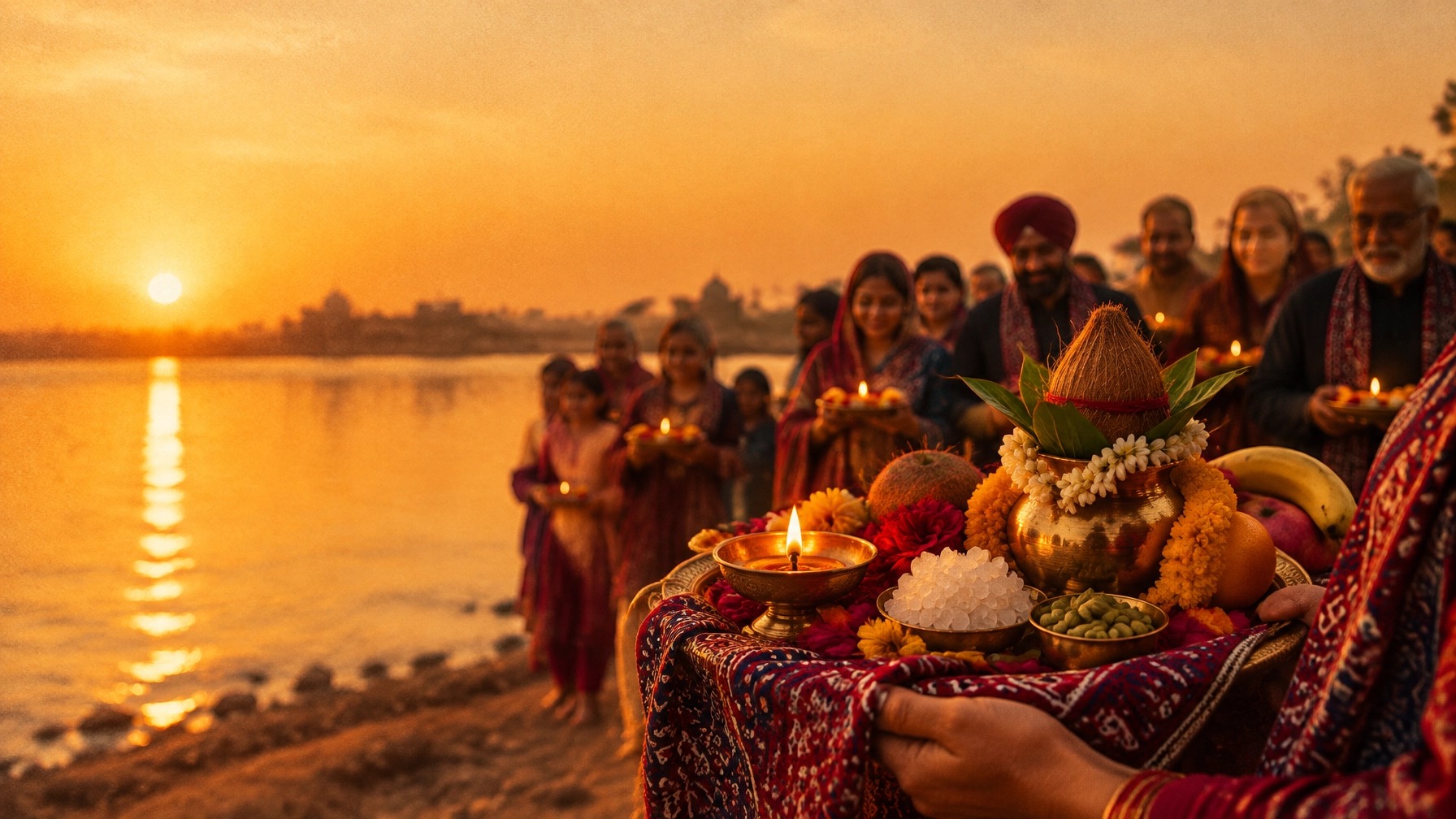
At the heart of Cheti Chand is the Baharana Sahib, also called Behrana Sahib. Its exact form varies between families and communities, but it often includes:
- A jyot, or oil lamp
- A kalash, a water vessel topped with a coconut
- Flowers and fruits
- Misiri, or sugar crystals
- Cardamom and other fragrant offerings
- Akha, often a mixture of rice and sugar
- An image or idol of Jhulelal
- A decorated thaal, sometimes draped in Ajrak
The lamp is guidance. The water is life. The fruit is abundance. The sweetness is gratitude. The coconut is fullness. The cloth is memory made visible.
Families carry the Baharana from home to temple. Communities carry it through streets. Children walk beside elders. In many celebrations people perform chhej, a traditional Sindhi stick dance, while bhajans and invocations to Jhulelal give the procession its rhythm. The procession is not a performance of belonging. It is belonging.
A Story We Carry · The Lamp at the Water’s Edge

In Dubai, twelve-year-old Meera had never seen the Indus. She knew it from photographs, from her grandmother’s stories told in a Sindhi that softened whenever she spoke of home, and from the small brass bowl of water kept near the family prayer shelf.
On the morning of Cheti Chand, Meera helped prepare the Baharana. She arranged the flowers, counted the sugar crystals, held the coconut steady while her grandmother tied the red thread. “What are we taking to the water?” she asked. “Everything,” her grandmother said. Meera looked at the thaal: only a lamp, fruit, rice, flowers, a small kalash. Her grandmother smiled. “Not everything we own. Everything we remember.”
That evening the community gathered beside the sea, glass towers rising behind them. The water was not the Indus; it was the Arabian Gulf. Still, when the lamp was lifted, the crowd became very quiet. Her grandmother placed one hand over hers. “Now you know. Home is not only where we began. Home is what we continue.”
Movement IV · The Sacred Water Ritual
At the end of the procession, the Baharana reaches the water: a river, a lake, the sea. In places without a natural water body, communities gather around a symbolic vessel or create a shared ritual space. The form changes; the meaning remains.
Devotees offer prayers to Jhulelal and present the Akha and other offerings to the water. In some traditions parts of the offering are immersed; in others the ritual is adapted with care, especially where environmental concerns make immersion inappropriate. The act is one of thanksgiving.
The water ritual also holds a deeper historical echo. Around one million to 1.4 million non-Muslim Sindhis were displaced around the Partition of 1947, according to varying historical and community estimates. They crossed borders carrying keys, photographs, recipes, religious icons, and fragments of language. Many rebuilt in India; others continued to the Gulf, Hong Kong, East Africa, Europe, and North America. The river changed. The ritual endured.
Read our chapter on The Great Exile →
Movement V · A Borderless New Year
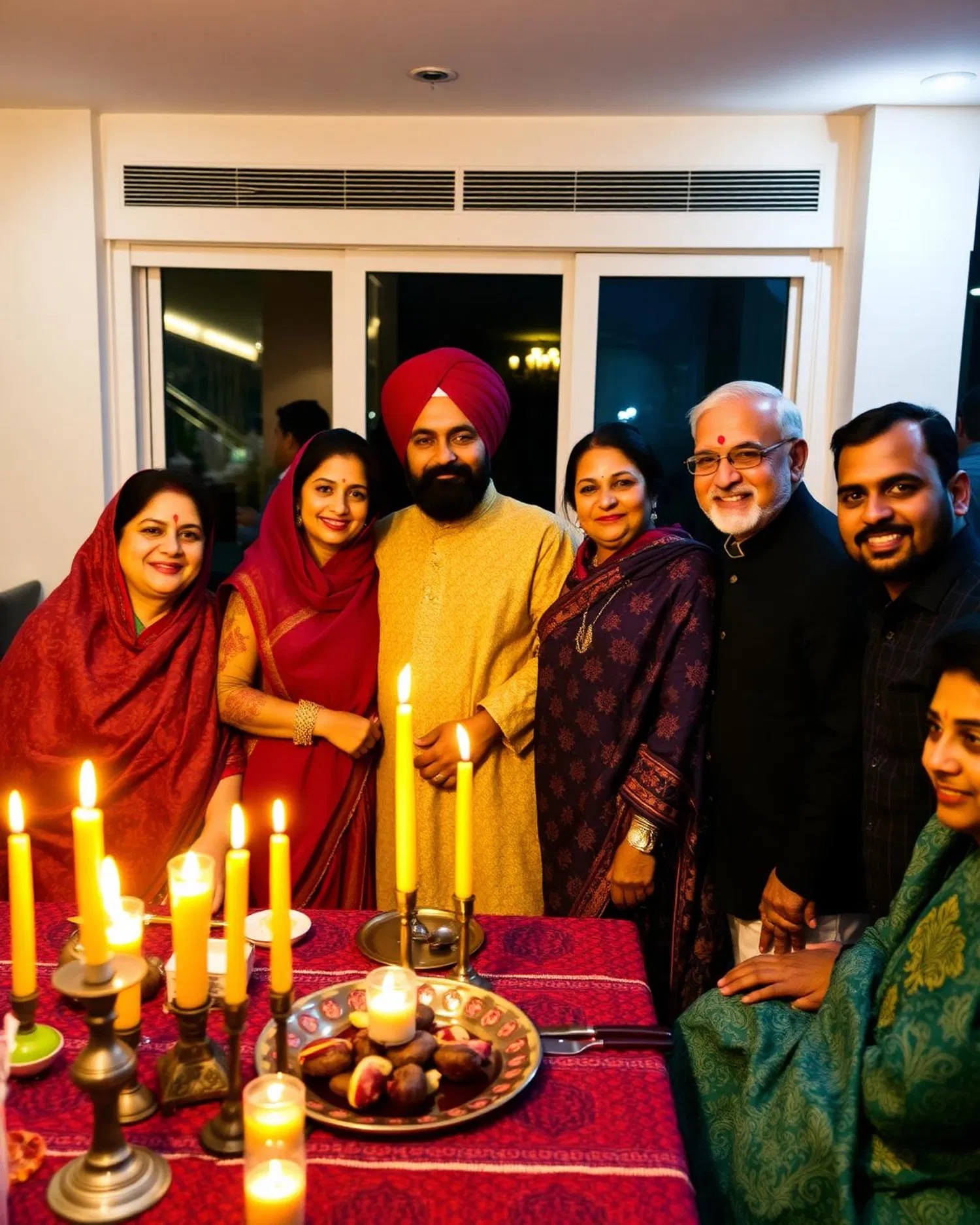
Cheti Chand makes no demand that we live in one place, and that is part of its power. The festival travels easily because Sindhi identity has always moved. More than 30 million Sindhis live around the world, yet the celebration remains intimate.
This is where Sindhi traditions become more than heritage. They become practice. We preserve culture by using it: by speaking Sindhi imperfectly but proudly, by cooking the foods our grandparents made, by wearing Ajrak as a declaration, by telling children that their history began before modern borders.
A procession in London may include translated prayers. A celebration in California may gather beside a community center instead of a river. A family in Melbourne may livestream the aarti for relatives in Mumbai, Dubai, or Karachi. The ritual bends. The thread does not break.
The Promise · Renewal Together
Cheti Chand is a new year, but it is also a return. A return to water. A return to courage. A return to one another. The Baharana teaches us that hope is not an abstraction: it is something carried carefully in both hands. It needs a flame. It needs witnesses. It needs a community willing to walk together.
On Cheti Chand we do not simply celebrate the arrival of another year. We renew an ancient promise: that Sindhi culture will remain alive wherever Sindhis gather, remember, and make room for the future.
Jai Jhulelal.