Indus Valley Artifacts: 7 Treasures That Speak Across 5,000 Years
The Priest-King, the Dancing Girl, a bull seal, the Great Bath, standardised weights, terracotta toys and an unread script — seven Indus Valley treasures explained.
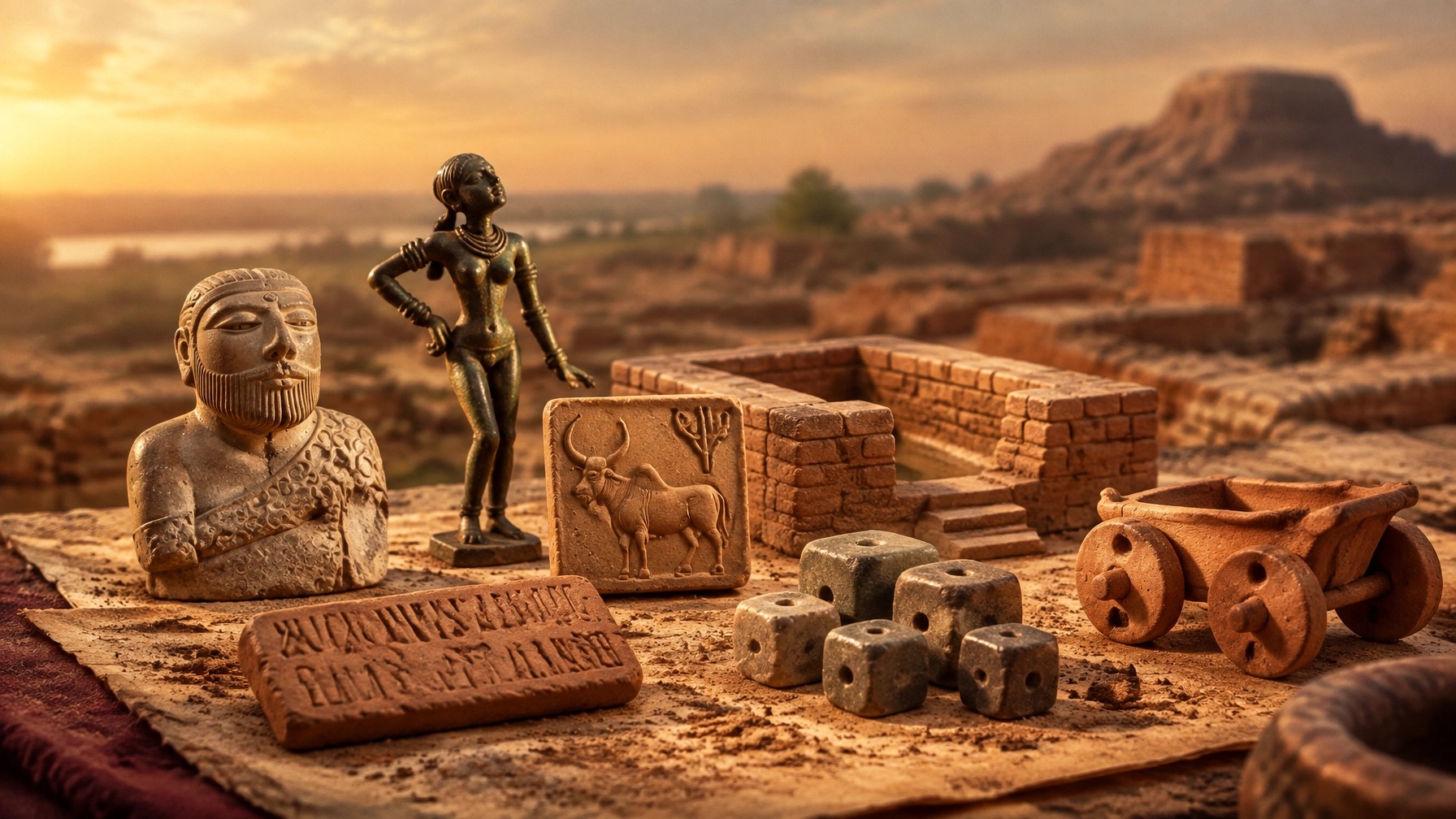
We begin with objects. Small objects. Ordinary objects. A carved seal, a child's cart, a stone weight, a figure no taller than a hand. Together they speak across 5,000 years.
The Indus Valley Civilization's mature urban phase ran roughly from 2600 to 1900 BCE, with major centres at Mohenjo-daro in Sindh and Harappa in present-day Punjab: planned streets, sophisticated drainage, long-distance trade, standardised measures — and a script we still cannot read. Start with our Ancient Origins chapter.
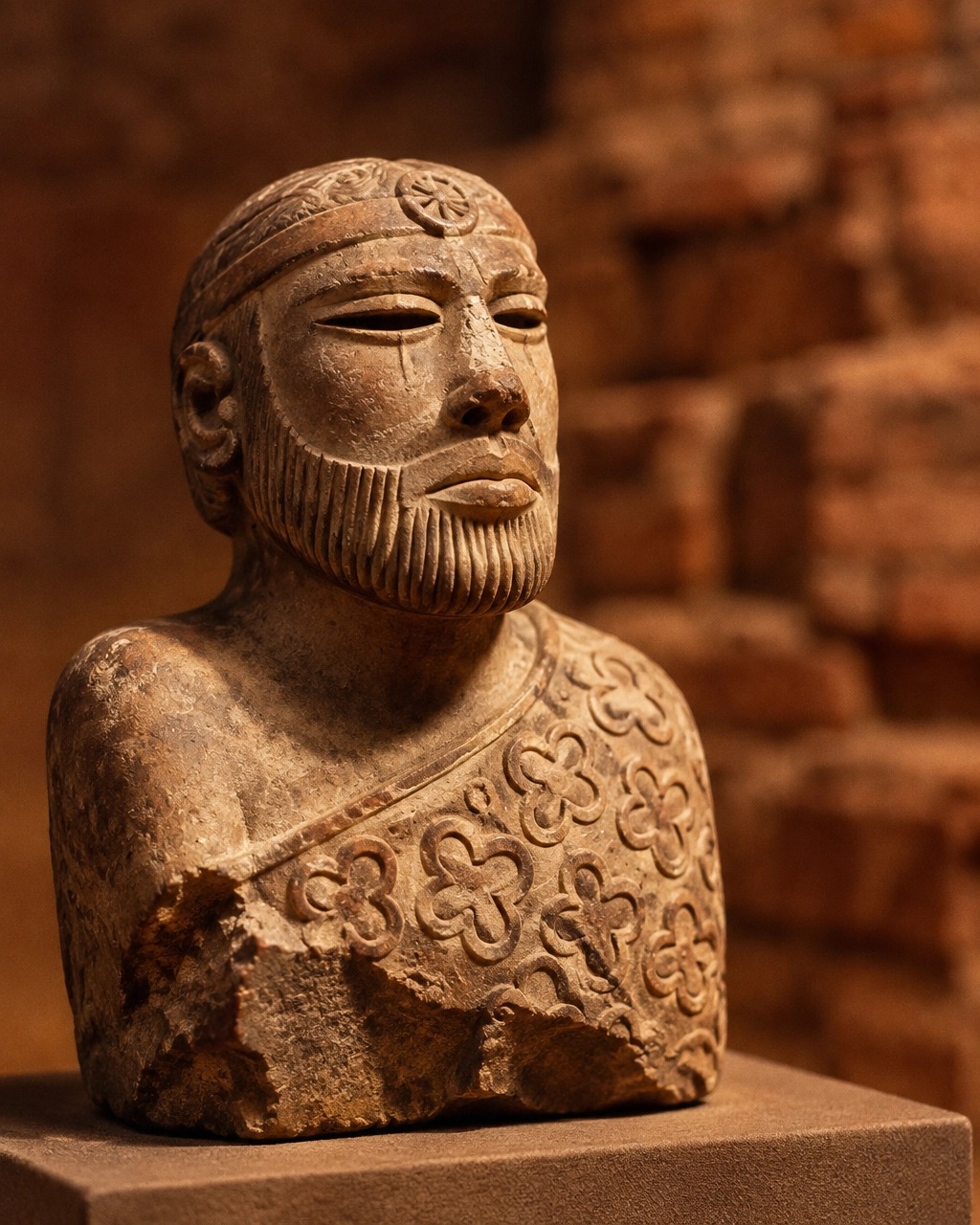
1. The "Priest-King"
About 18 centimetres tall, carved in steatite, found at Mohenjo-daro and generally dated to around 2000–1900 BCE. The name is modern. We do not know whether he was a king, a priest, an individual or an ideal. What the figure does tell us is that this was a society that valued portraiture, fine textiles and dignity — authority expressed through stillness rather than spectacle.
2. The Dancing Girl
Small, bronze and unforgettable — one hand on the hip, one arm crowded with bangles, dated to roughly 2500 BCE. She was cast by the lost-wax method, an advanced process demanding exact control. She complicates how we imagine ancient cities: Mohenjo-daro was not only drains, bricks and warehouses, but rhythm, adornment and confidence.
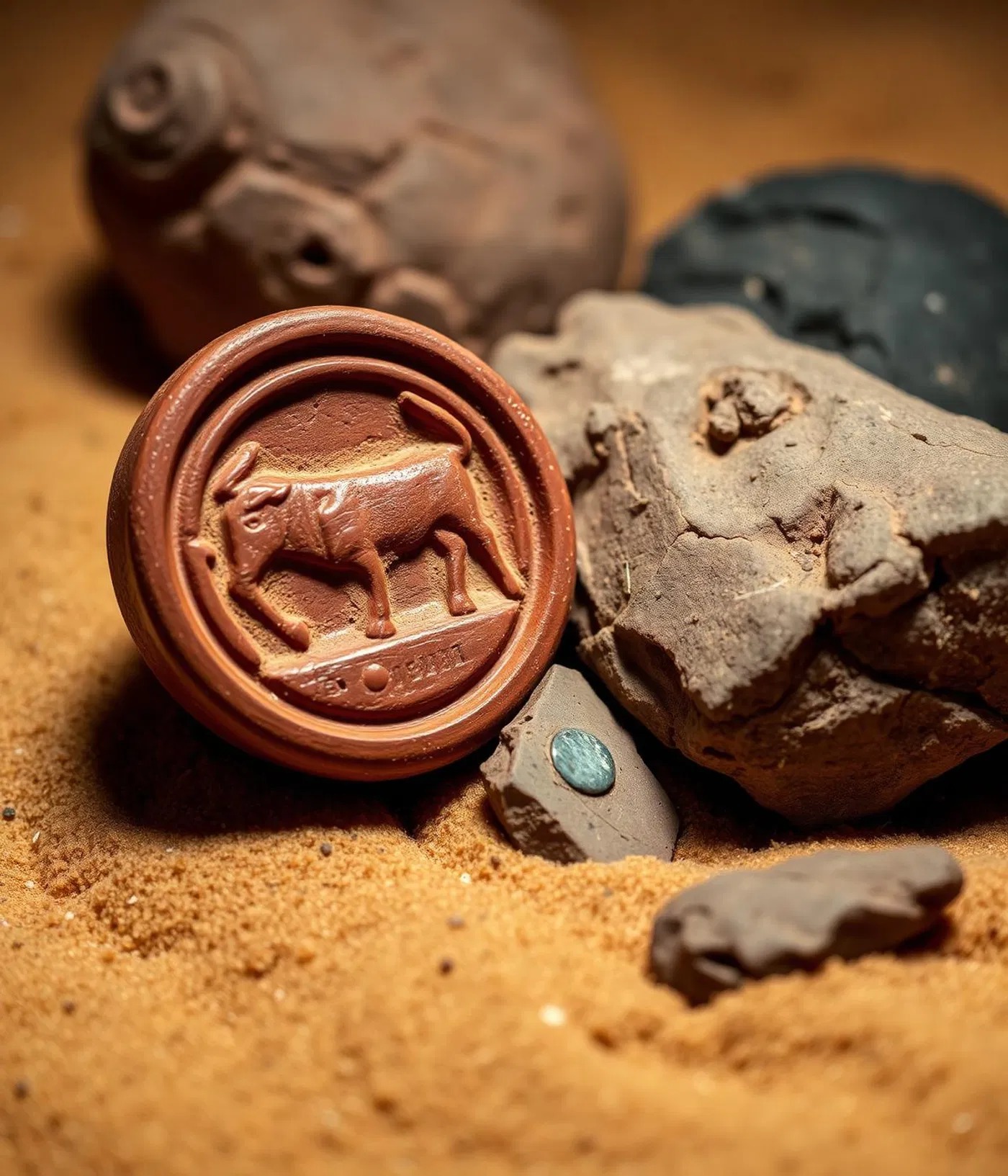
3. The Bull Seal
A bull in profile above a short line of undeciphered signs, carved in reverse so it could press into clay. It may have marked a package, a merchant or an owner. Related seals appear across the civilisation's cities and in regions connected to Mesopotamia and the Arabian Gulf. Trade moved, people moved, and symbols moved with them.
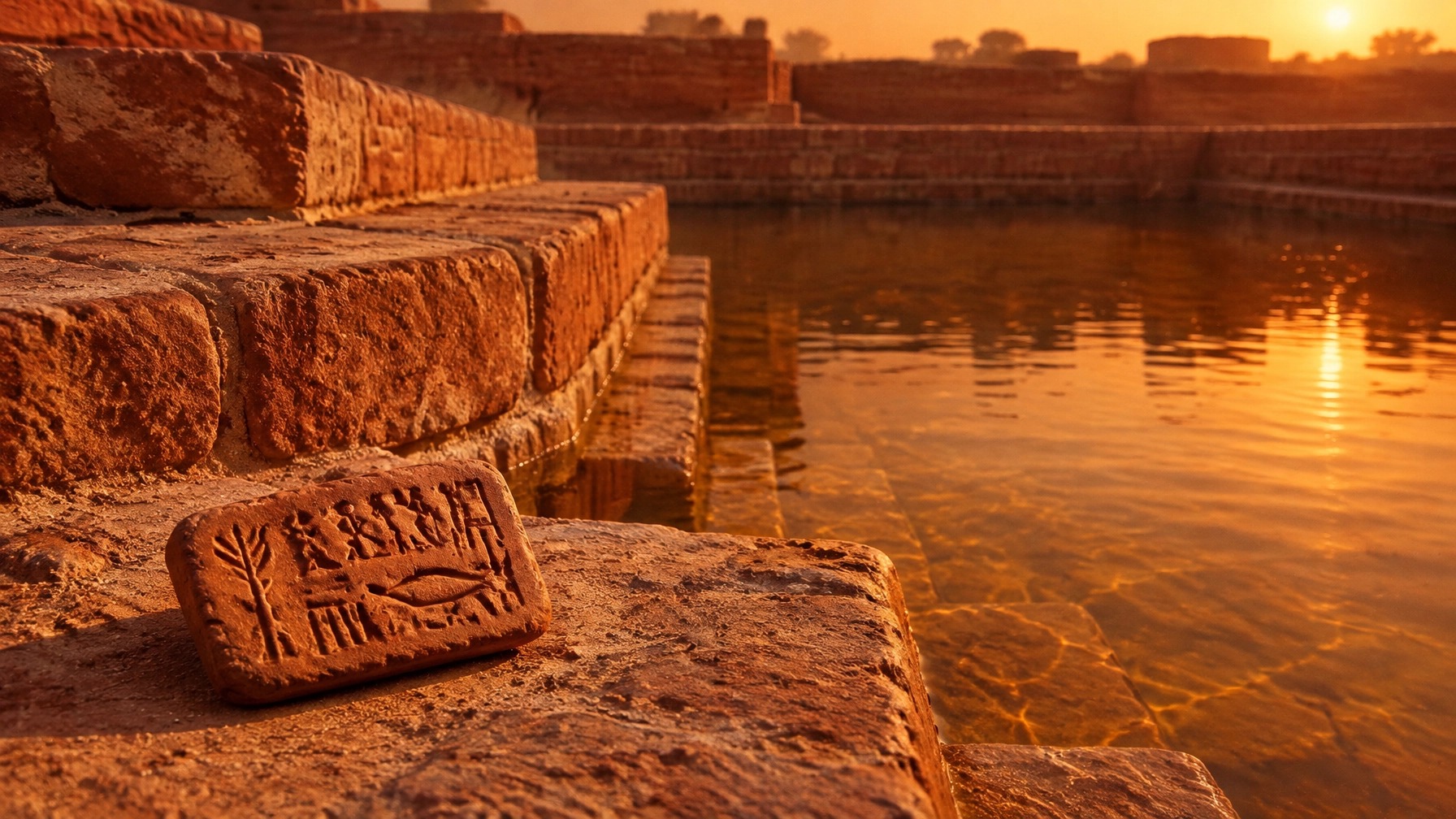
4. The Great Bath
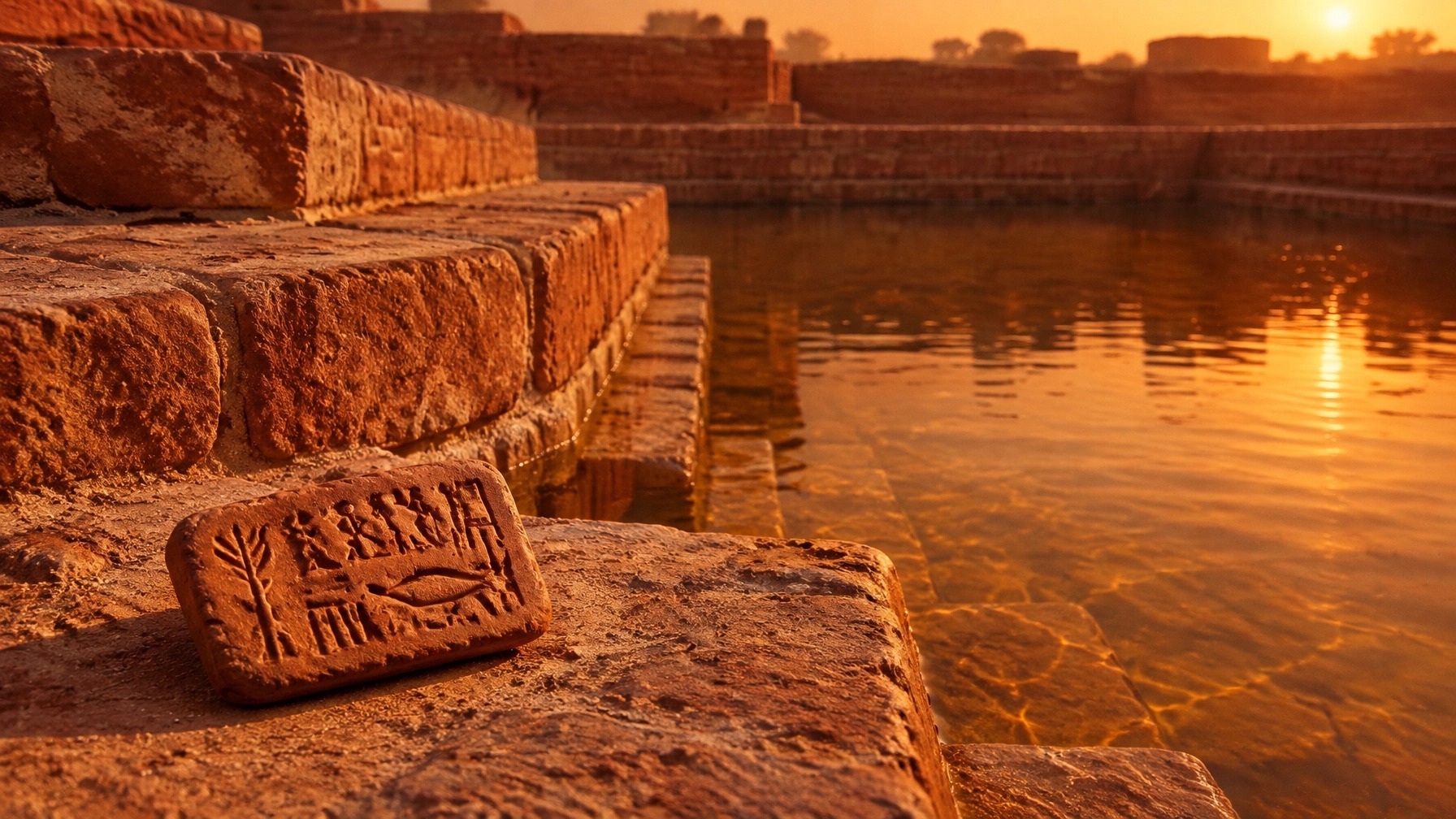
Not portable at all: brick, bitumen and water at the centre of Mohenjo-daro's citadel mound, engineered as a sealed tank with surrounding rooms. Its purpose remains unknown — ritual, communal, civic. What is visible is care: measured, levelled, sealed, planned for water to enter and leave. In Sindhi memory, water is never only water.
5. Standardised weights
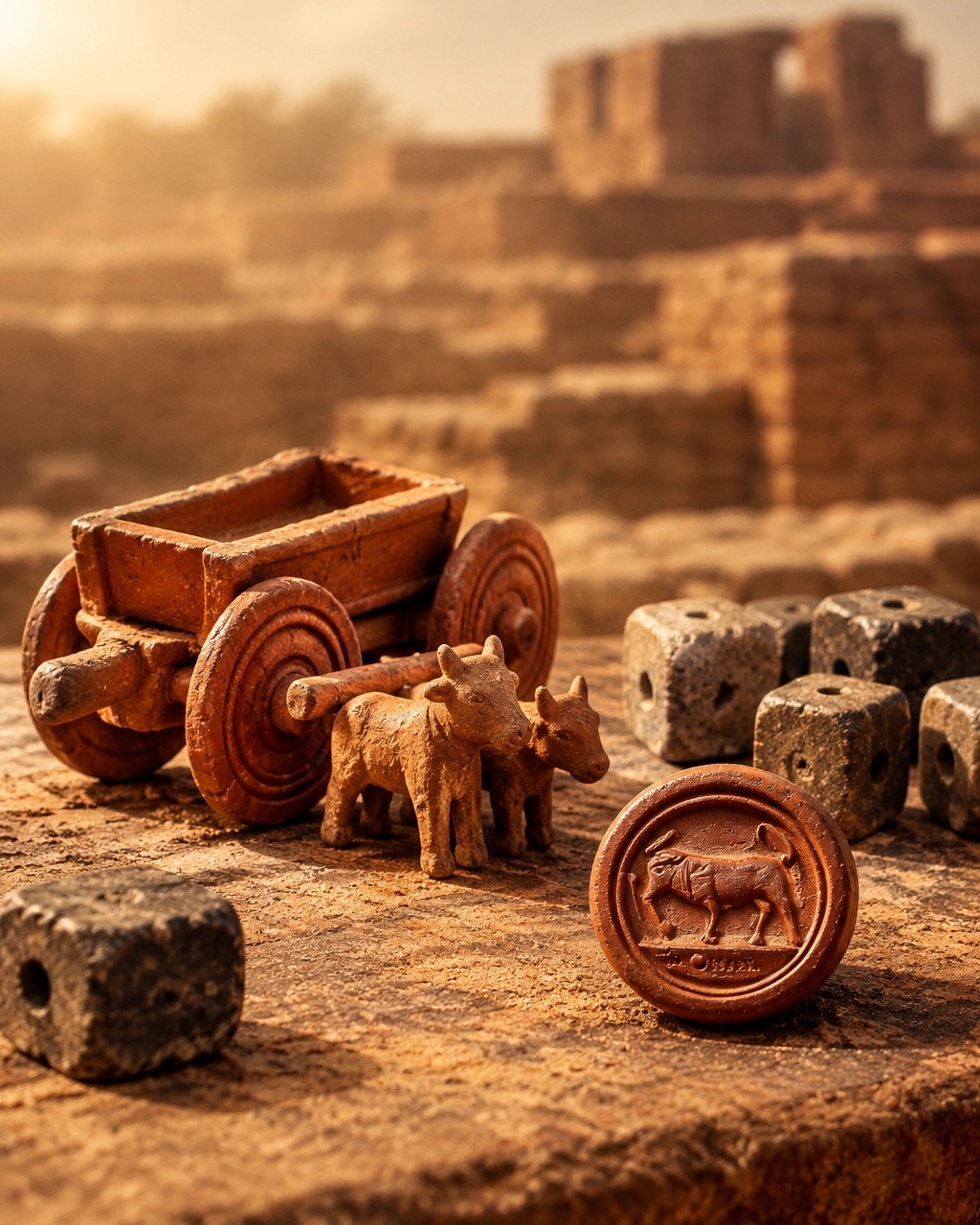
Carefully cut cubical stone weights, consistent across settlements separated by great distance. That consistency suggests more than technical skill — it suggests trust. A shared standard let grain, beads, metals and textiles move through a commercial world with recognisable measures. They may tell us more about daily civilisation than any royal portrait.
6. Toys and small figures
Terracotta carries fingerprints. Toy carts with movable wheels, animal figurines, game pieces, possible dice. A clay bull might have been a child's toy, a household shrine object, or both. This is where the ancient world becomes intimate — a parent shaping an animal from wet earth, a household gathered around something made to be held.
7. The Indus script
The last treasure is a question. The signs appear on seals, tablets and pottery, usually only a few characters long, and remain undeciphered — no bilingual key has unlocked them. Still, the script tells us that identity could be marked, goods organised, meaning carried beyond the human voice.
A living archive
A face, a dancer, a bull, a bath, a measure, a toy, a script — authority, expression, trade, community, trust, play and memory. The cities declined and the script fell silent, but the river's descendants remain: more than 30 million Sindhis across over 100 countries. The artefacts are ancient; the responsibility is ours. Add your family's story.