The Sindhi Diaspora: How 30 Million People Built a Borderless Nation
Thirty million, forty million, a hundred countries: how Sindhi merchants, exiles and their descendants built a nation held together by practice rather than borders.
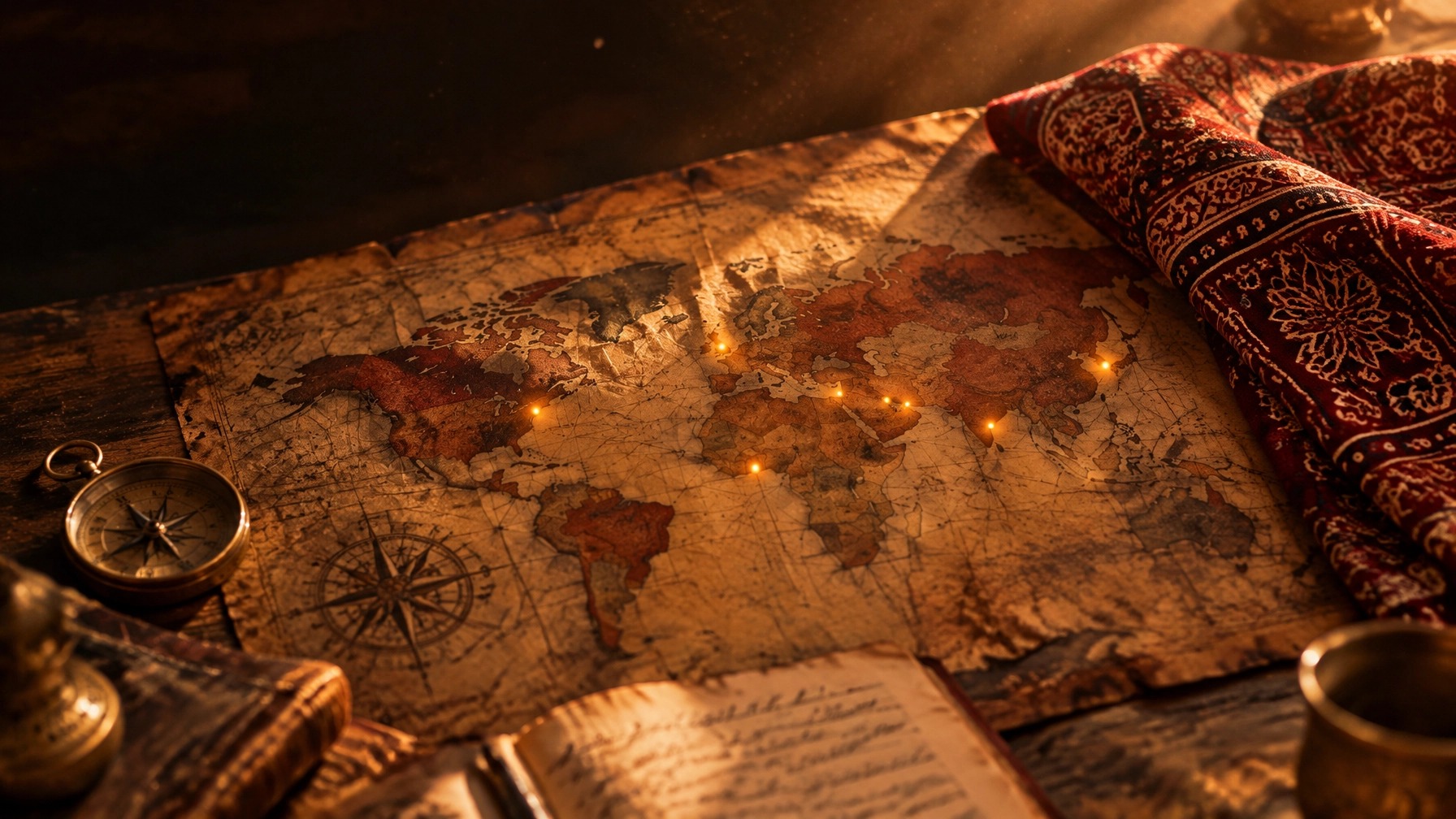
We are often introduced by a number. Thirty million. It suggests scale — a people spread across continents, connected by memory, trade, language and family. But numbers need care.
What the numbers actually say
The Sindhi population in Pakistan is estimated at roughly 35 million, and the global Sindhi population is often placed above 40 million. The overseas community is far smaller — but remarkably dispersed, present in more than 100 countries. That distinction does not weaken the story. It sharpens it. We are not a people defined by one migration.
Before the border
The diaspora did not begin in 1947. Sindh sat on the lower Indus with ports facing the Arabian Sea, and its merchants learned early how to cross distance without surrendering identity. By the late nineteenth century, Sindworki trading families had built networks reaching Hong Kong, Singapore, Kobe, Colombo, Port Said, East and West Africa and Latin America — textiles, curios, watches, household goods. A shop became a meeting place. A ledger became a family archive.
1947: rupture and reconstruction
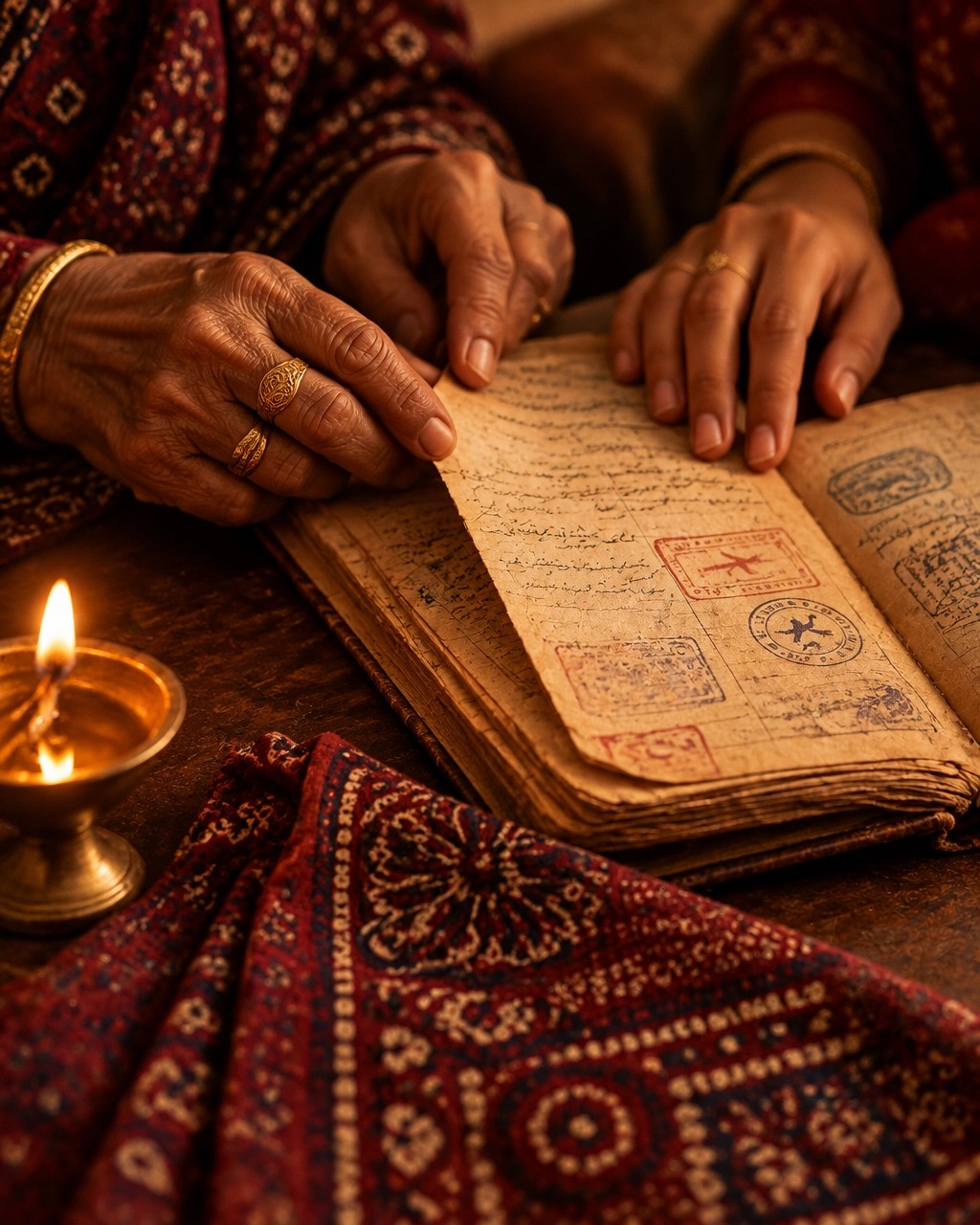
For Hindu and Sikh Sindhis, Partition turned migration from a commercial choice into a historical rupture. Roughly one million non-Muslim Sindhis left Sindh for India; many continued onward along established family and trade routes. In India, communities formed in Mumbai, Ulhasnagar, Gandhidham, Adipur, Ahmedabad, Delhi, Jaipur and Pune. The 2011 Census recorded about 2.77 million Sindhi speakers — a count of language, not of ancestry. Read more in The Great Exile.
Our grandparents lost a map. They gave us a method: gather, educate, trade, remember.
The cities of arrival
The modern community is distributed through nodes rather than a capital. Mumbai became a centre of post-Partition enterprise. Hong Kong linked Asian markets through family firms and long-standing associations. Dubai became a Gulf gateway for trade, textiles and professional work. Lagos, London, New York and New Jersey each added their own chapter. The cities change; the connective tissue does not.
A story we carry: the ledger between cities
The following is a fictional composite, written to reflect experiences shared across generations of the diaspora.
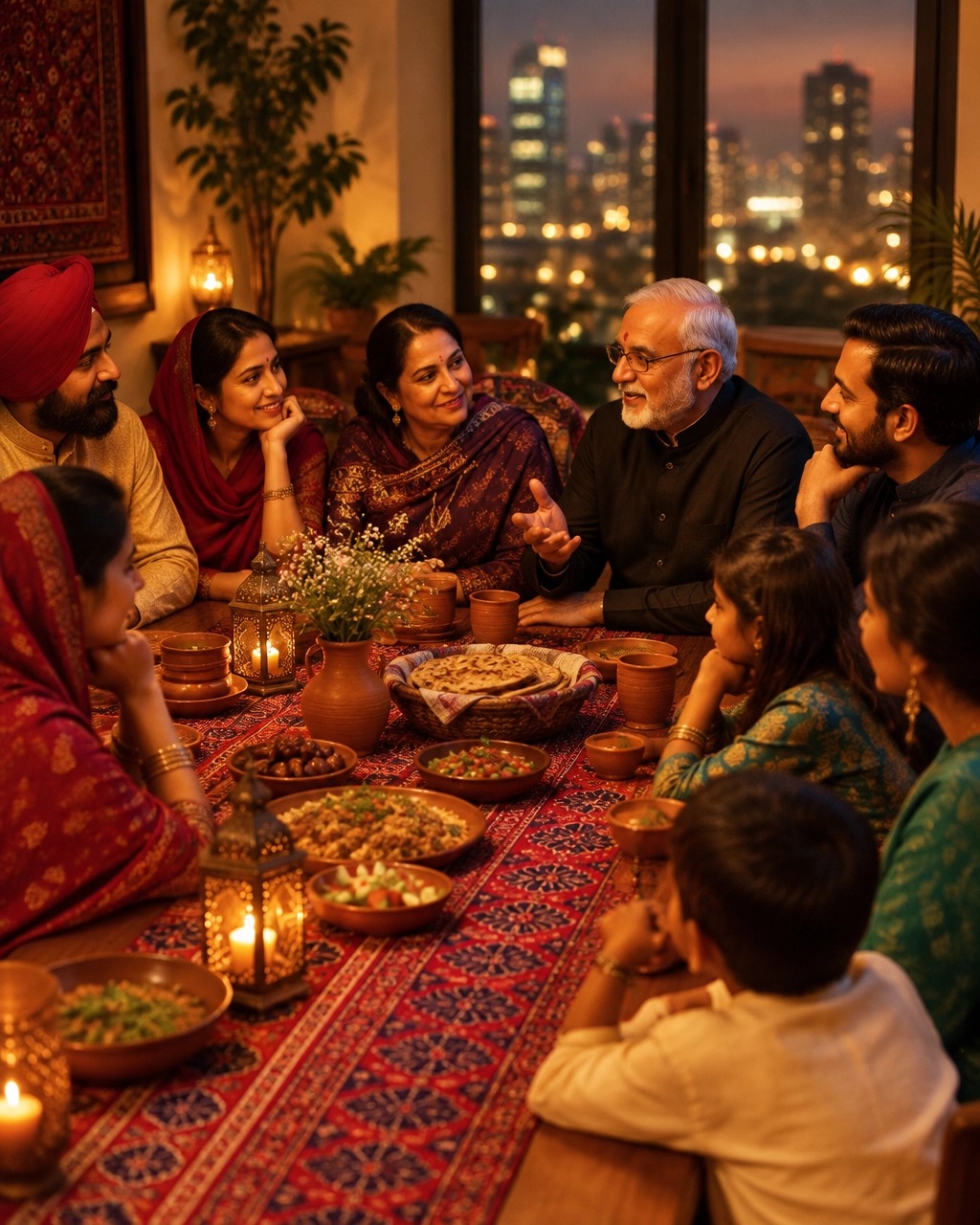
In Mumbai, a young woman found an old ledger in her grandmother's cupboard. It began in Karachi before Partition, moved to Ulhasnagar, then recorded shipments to Hong Kong, later Dubai, London, New York. On the first page her great-grandfather had written: “A business can cross the sea. A family must carry the shore.” Her grandmother explained that the shore was the language spoken while cooking, the way guests were welcomed, the Ajrak folded for a ceremony. So the cousins added their own entries — a recipe, a wedding song, a childhood phrase. The ledger became a family archive. That is how preservation works: not a museum case, but a living handoff.
What holds a borderless nation together
Not territory, but practice. Food — sai bhaji, koki, seyal mani, kadhi. Festivals — Cheti Chand, Jhulelal traditions, weddings and community meals. Textile — the red and indigo geometry of Ajrak. Language, even as fluency changes. And generosity: the schools, colleges, temples and associations Sindhis built in the places that received them.
The nation we are still building
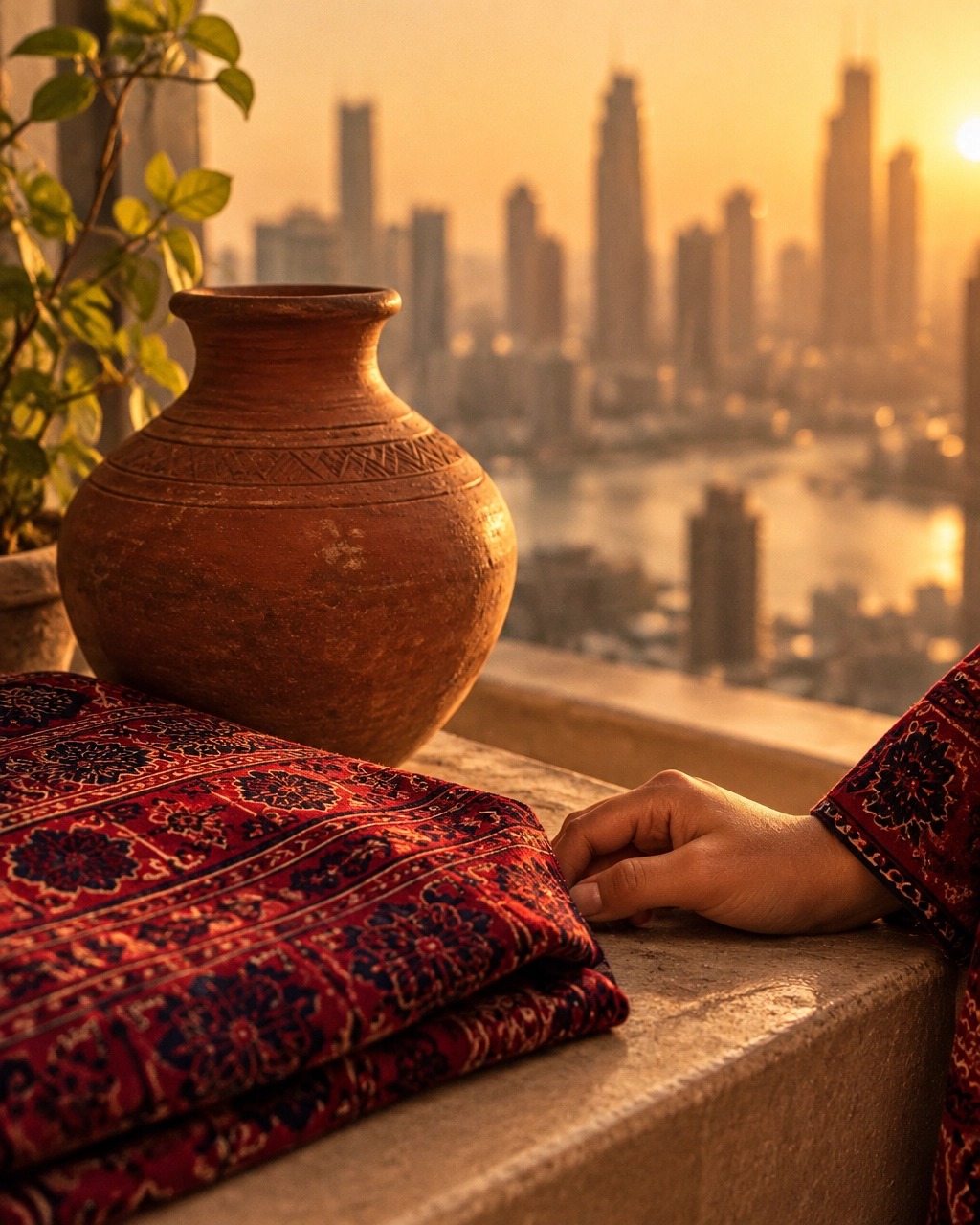
The diaspora is often described as a scattering. We see circulation — people, capital, recipes, songs, ideas, responsibilities. A people can lose a homeland and still create belonging. Explore the diaspora chapter or add your family's story.