Sindhi Food: The Recipes That Carried Home Across Oceans
Sai bhaji, Sindhi kadhi, dal pakwan and koki — the four dishes that turned a lost homeland into a portable one, and why they still taste like belonging.
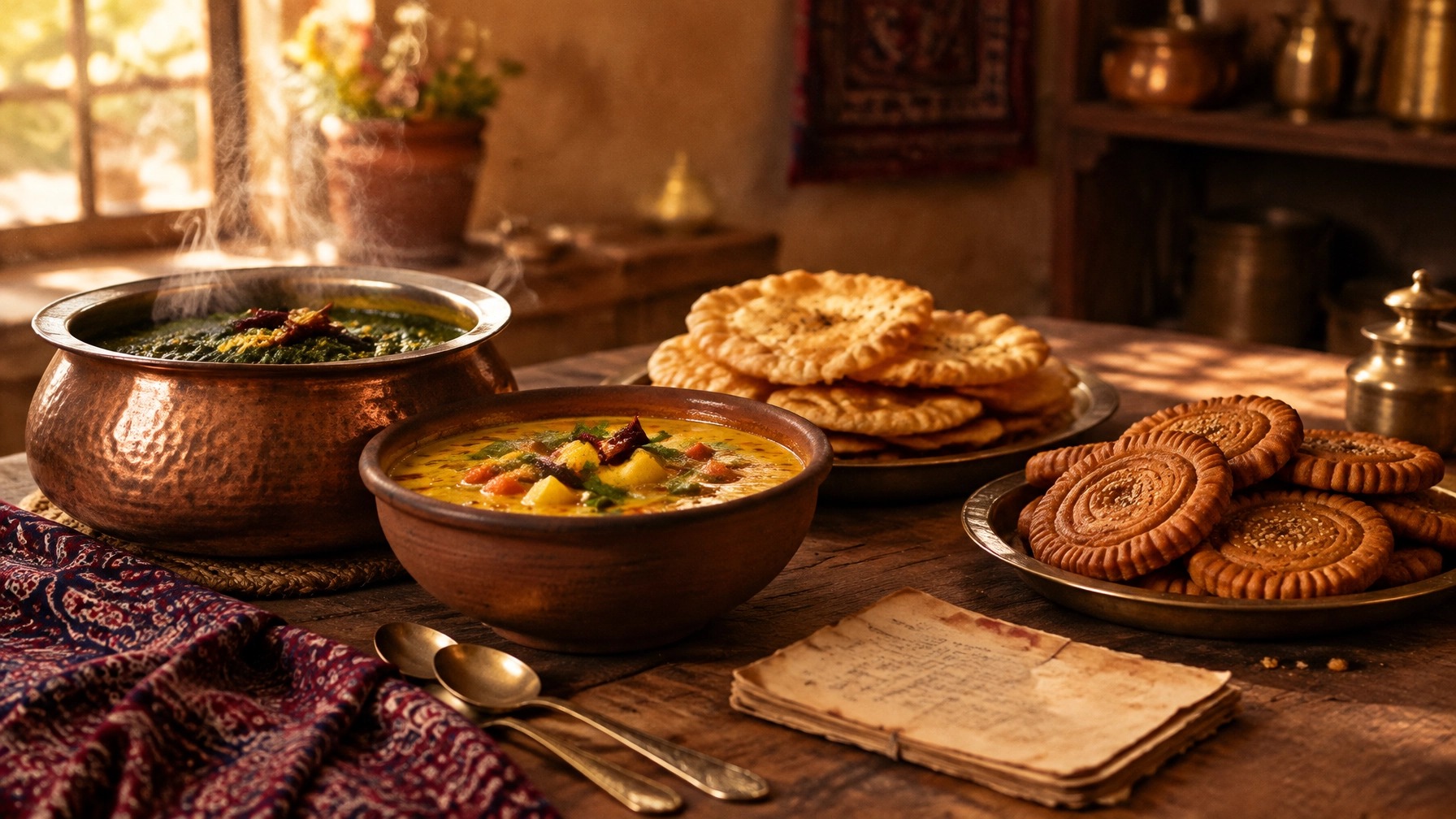
We know a homeland by its rivers, by its language, and by the food that rises from a familiar kitchen. For us, Sindhi food is a portable homeland — a daily act of remembrance.
The kitchen as homeland
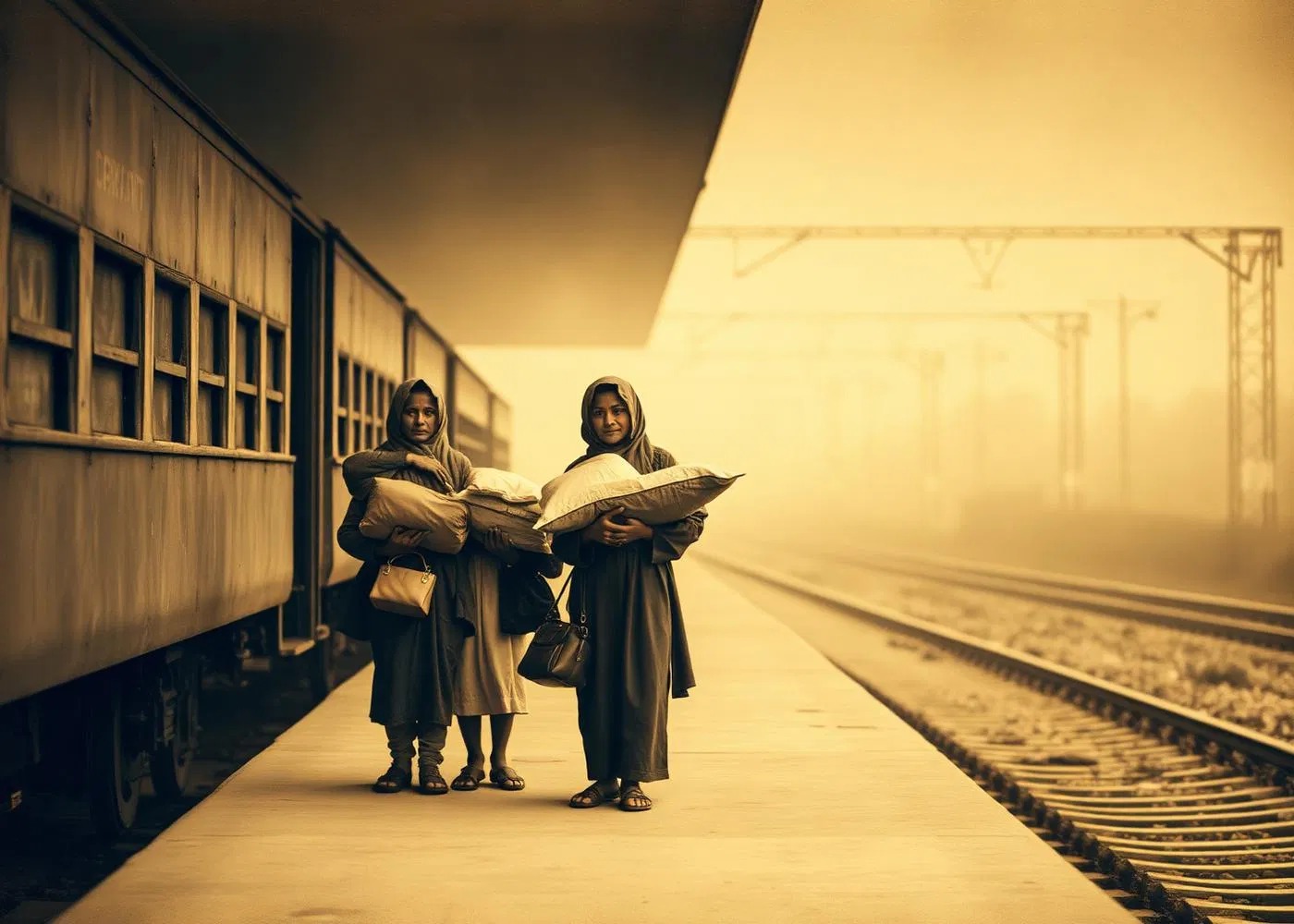
The Sindhi story reaches back more than 5,000 years to the cities and riverbanks of the Indus valley. In 1947, Partition displaced well over a million Sindhis. Today more than 30 million Sindhis live across a hundred-plus countries. The geography changed; the kitchen adapted. A copper pot became a steel pot. A courtyard became an apartment. A Sindhi bazaar became a grocery aisle in London, Dubai, Hong Kong or New Jersey. The rhythm stayed: temper the spices, roll the koki, gather everyone close.
A family story: the recipe card with no measurements
In one family, sai bhaji was never written down. There was only a green notebook with a torn cover and one sentence in the grandmother's hand: “Add the vegetables until the pot feels generous.” The first time her granddaughter cooked it alone, she called three times. Is the dal soft enough? Does it need more spinach? Why does it taste different? Her grandmother paused. “Because you are cooking it in another country. Now add the tempering.” A recipe can cross oceans and change in the crossing. It survives by being cooked again.
Four dishes, one unbroken thread
1. Sai bhaji — green abundance
Spinach, lentils and seasonal vegetables cooked down with garlic, tomatoes, onions and spice into something earthy and deeply comforting. Sai means green. It is served with rice, flatbread or bhuga chawar — rice with caramelised onions and tomatoes — and often appears at festive gatherings including Cheti Chand. It reflects a central quality of Sindhi cooking: generosity without waste.
2. Sindhi kadhi — tang, colour and patience
Not the yoghurt kadhi many people know. Its base is besan, cooked into a bright, tangy gravy carrying okra, potatoes, cluster beans, yam, sometimes drumsticks. Sourness is essential — tamarind or dried mango cuts the richness. Mustard seeds, curry leaves and chillies arrive in a sharp, fragrant tempering. Serve over hot rice with alu tuk alongside.
3. Dal pakwan — the breakfast that refuses to be modest
Soft, spiced chana dal beside crisp deep-fried pakwan, with onions, chutney, chillies and sev. Soft, crisp, bright. Humble ingredients treated with ceremony — lentils become an event, and a breakfast table becomes a gathering place.

4. Koki — the flatbread with a memory built in
Whole wheat flour with onions, green chillies, coriander, cumin and oil; some families add besan or pomegranate seeds. Shaped thick and marked with shallow checks so it cooks evenly and takes in ghee. Cooked slowly — patience matters. Breakfast with curd, an afternoon snack with chai, a travel companion with pickle, a tiffin packed before dawn. That is how culture often survives: through someone waking early enough to cook.
What migration changed — and what it could not
Partition broke the physical relationship between people and place. Food became one of the first forms of continuity: a recipe fits into memory when a household cannot fit into luggage. That is why Sindhi cuisine is so adaptive — it carries the imprint of Sindh without demanding that every ingredient stay the same. Read The Great Exile for the fuller story.
A borderless table
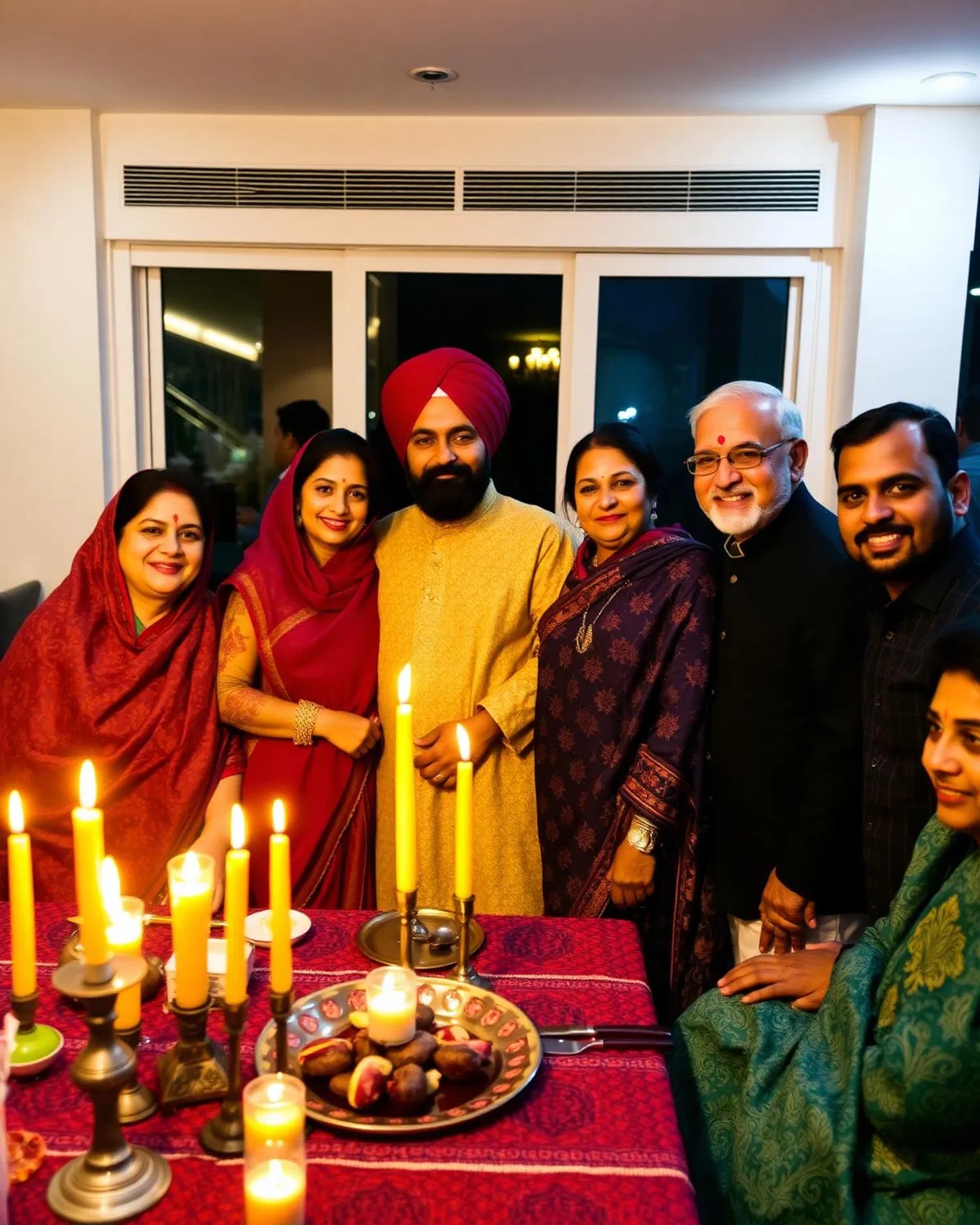
A koki is rolled in Toronto. Sai bhaji simmers in Nairobi. Dal pakwan is prepared in Dubai before a celebration. A grandmother in Mumbai teaches a grandson in California how to judge the dough by touch. Sindhi food is portable home — green, tangy, crisp, slow-cooked and generous.

More in our guide to Sindhi food, or share your family recipe story.