Sindhi History: From the Banks of the Indus to Every Continent on Earth
From Mohenjo-daro to every continent on earth: five millennia of Sindhi history through the Indus cities, Buddhism and Sufism, colonial Sindh, the 1947 Partition, and a borderless diaspora.
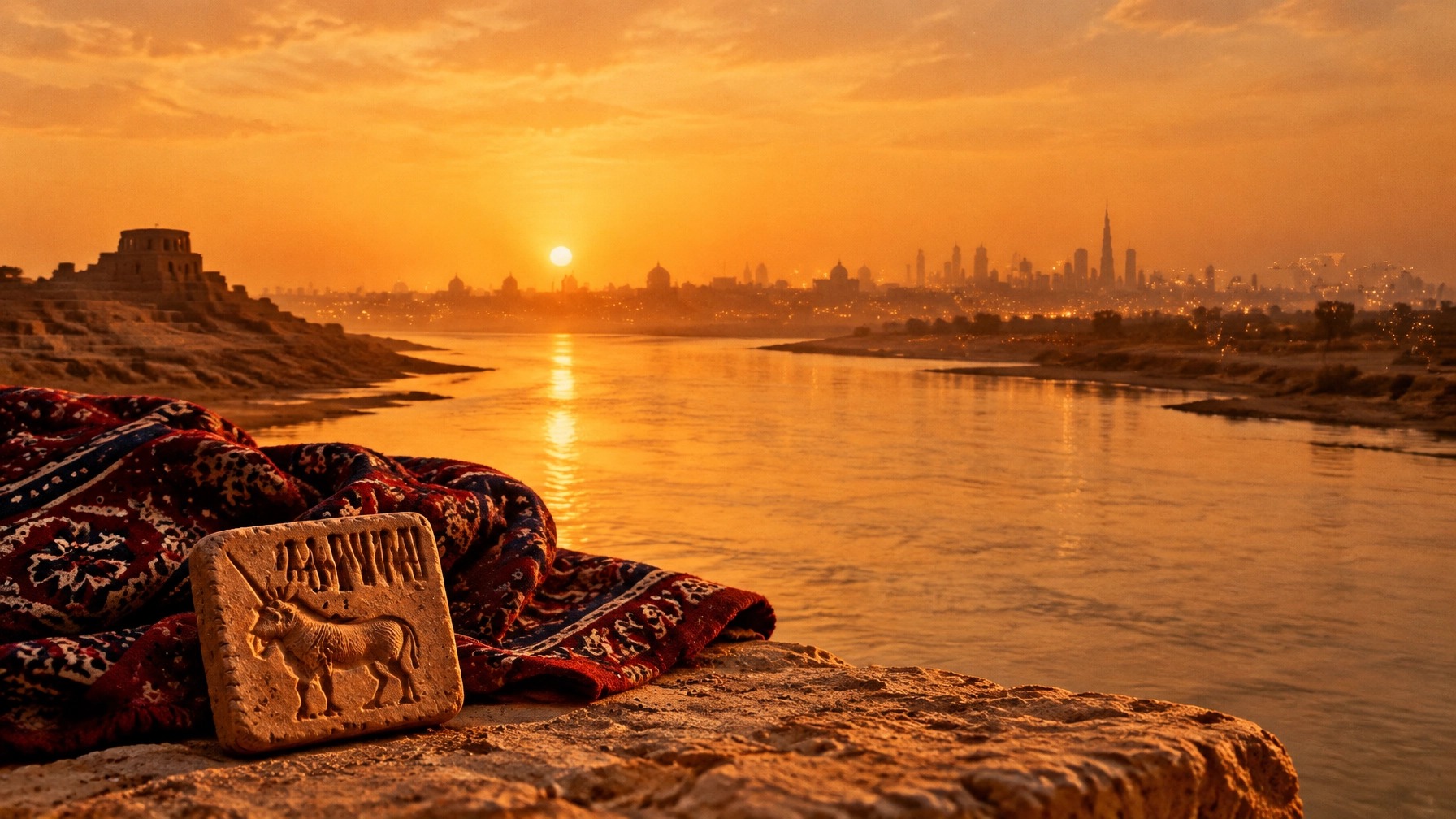
We begin with water.
The Indus moves through memory like a living thread. It nourished cities. Carried traders. Witnessed kingdoms rise and disappear. It gave a people their name, their rhythm, their imagination.
This is Sindhi history: ancient and unfinished. Rooted in brick, river, poetry, faith, exile, and return. From the streets of Mohenjo-daro to Mumbai. From Karachi to Dubai. From Nairobi to London, Singapore, Johannesburg, and New York. We have crossed borders without becoming borderless in spirit.
Movement I · Before the Borders
Long before modern nation-states, before passports and partition lines, the lower Indus was home to one of the world’s great urban civilizations. The Indus Valley Civilization flourished broadly between 3300 and 1300 BCE, with its mature urban period often dated from roughly 2600 to 1900 BCE. At Mohenjo-daro, in present-day Sindh, people built gridded streets, standardized brick structures, wells, workshops, and sophisticated drainage.
This was not a scattered settlement culture. It was a city civilization: organized, skilled, connected.
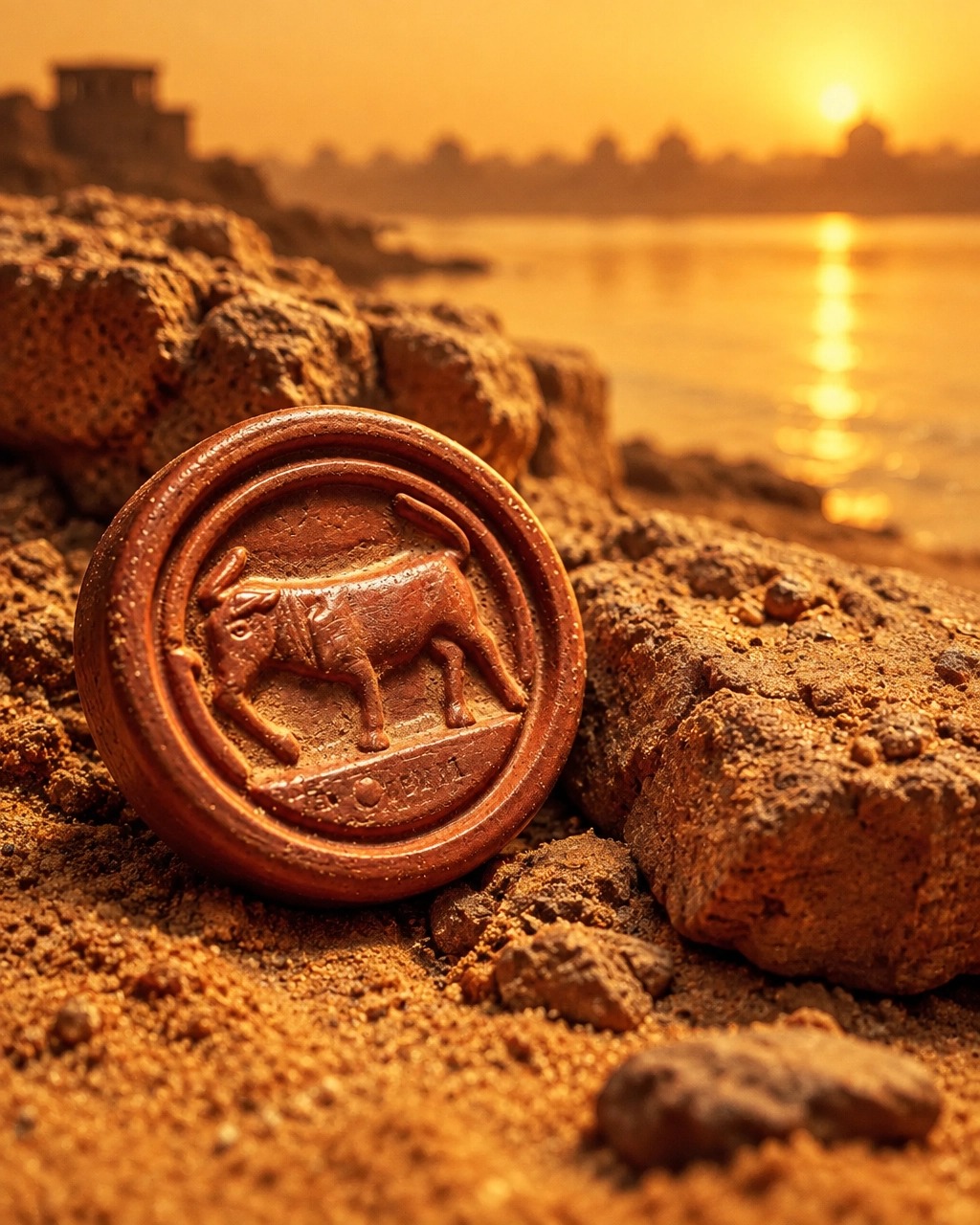
The people of these cities traded across long distances, with archaeological evidence linking the Indus world to regions reaching toward Mesopotamia and the Persian Gulf. They worked copper, stone, shell, clay, and textiles.
We should be careful with simple claims. The modern Sindhi people cannot be reduced to a single archaeological population, and history is not a straight genetic line from one city to one identity. Civilizations transform. Communities move. Languages evolve. But the Indus remains a deep source of cultural memory.
Movement II · Many Faiths, One River
After the decline of the great Indus cities, Sindh did not become empty. New communities arrived, older traditions changed, political powers shifted, and agricultural life continued along the river. The region absorbed influences from the Achaemenid world, the Mauryan Empire, and neighboring South Asian cultures.
By the Mauryan period, Buddhism held a significant place in Sindh, with monastic networks and trade routes connecting the region to wider currents across South Asia. Hindu traditions also remained part of the landscape.
Islam entered Sindh decisively with the Arab conquest led by Muhammad bin Qasim in 712 CE. The conquest changed political authority, but cultural transformation unfolded across centuries, not in one instant. Then came the great flowering of Sufism: shrines became places of devotion, music, poetry, hospitality, and memory. Figures such as Lal Shahbaz Qalandar and Shah Abdul Latif Bhittai remain central to this inheritance.
“We learned that a river does not ask every drop where it came from. It carries each one forward.”
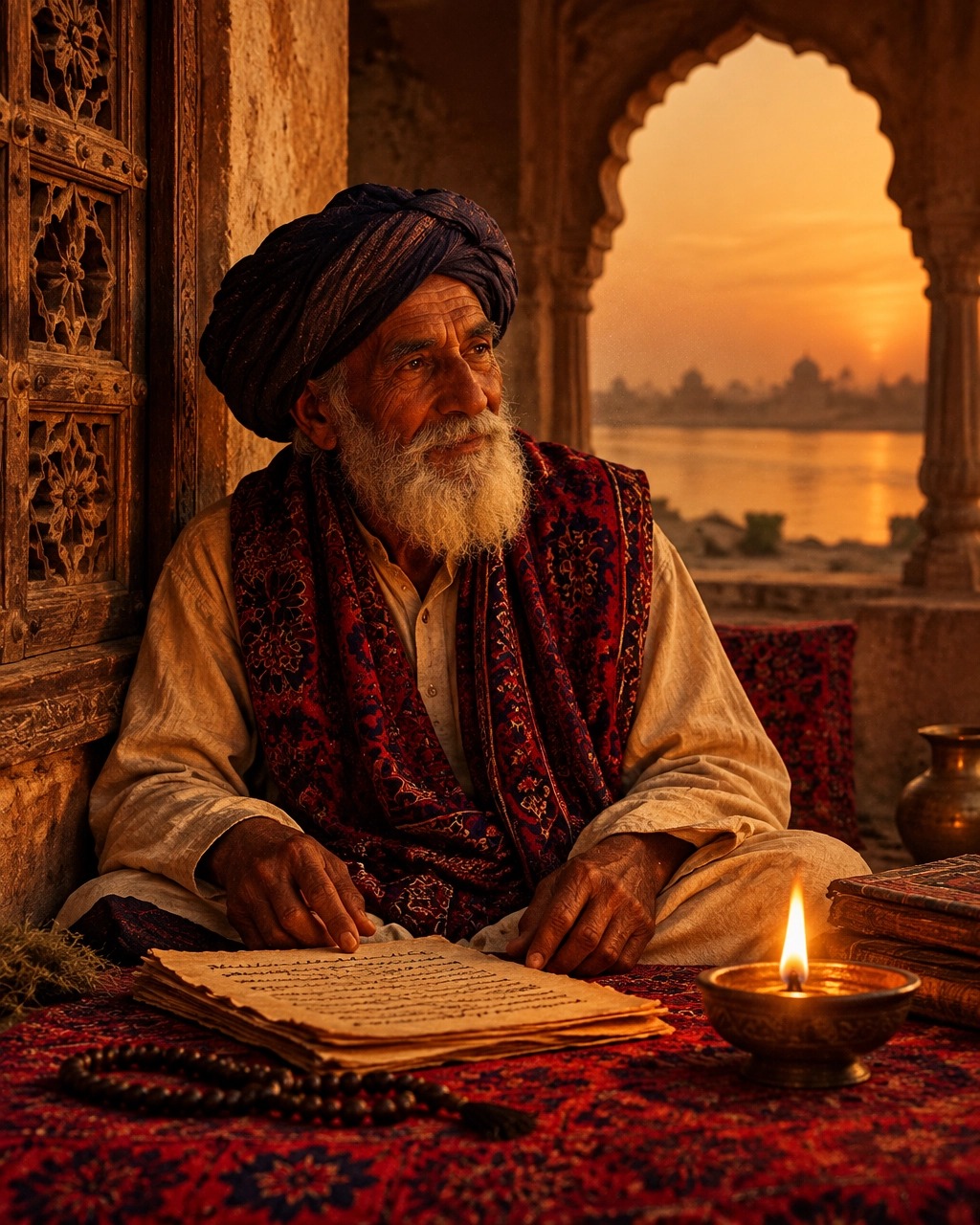
That line belongs to an original family story we might hear at a Sindhi table today — a grandmother explaining why the same prayer can be spoken in different accents, and why a tradition survives not by remaining frozen, but by being practiced.
Movement III · Under the Colonial Shadow
The British conquered Sindh in 1843, defeating the Talpur rulers at the Battle of Hyderabad. The region was incorporated into the Bombay Presidency, and colonial rule brought new systems of law, taxation, administration, education, and infrastructure. Karachi expanded into a major port city, where river agriculture and global commerce, inherited craft and industrial trade, shrine courtyards and colonial offices stood side by side.
In 1936, Sindh became a separate province from the Bombay Presidency. Questions of representation, language, land, religion, and self-rule became impossible to ignore.
Movement IV · 1947: The Road Without a Map
Partition transformed Sindhi history. In 1947, British India was divided and Sindh became part of Pakistan. Unlike Punjab and Bengal, Sindh did not experience the same scale of formal territorial division, but its people endured a profound demographic and emotional upheaval.
Large numbers of Hindu Sindhis left for India: merchants, teachers, professionals, landowners, artisans, civic leaders. They left homes, businesses, neighborhoods, temples, shrines, photographs, recipes, and ancestral languages. They carried what could be held — a brass vessel, a family ledger, a few garments, a memory of the river.
One original story captures the quiet force of that inheritance. In a small apartment far from Sindh, a young girl once asked her grandfather why he kept an old, empty tin box beneath his bed. Inside were three folded letters, a grain of river-colored soil, and a handwritten recipe for sai bhaji. He did not call it a suitcase. He called it “the part of home that could travel.”
Years later, the girl prepared that recipe for her own children. She spoke the names of the ingredients in Sindhi. She did not recreate the old house. She recreated its meaning.
Partition was a wound, but it was not the end of the story. Sindhi families rebuilt with extraordinary enterprise across India and beyond. We did not leave history behind. We made history portable.
Movement V · A Borderless Nation
Today, Sindhi communities live across every inhabited continent: India, Pakistan, the Gulf states, East and Southeast Asia, East Africa, Europe, North America, Australia. The modern Sindhi world moves through Dubai, Mumbai, London, Singapore, Hong Kong, Johannesburg, Toronto, New York.
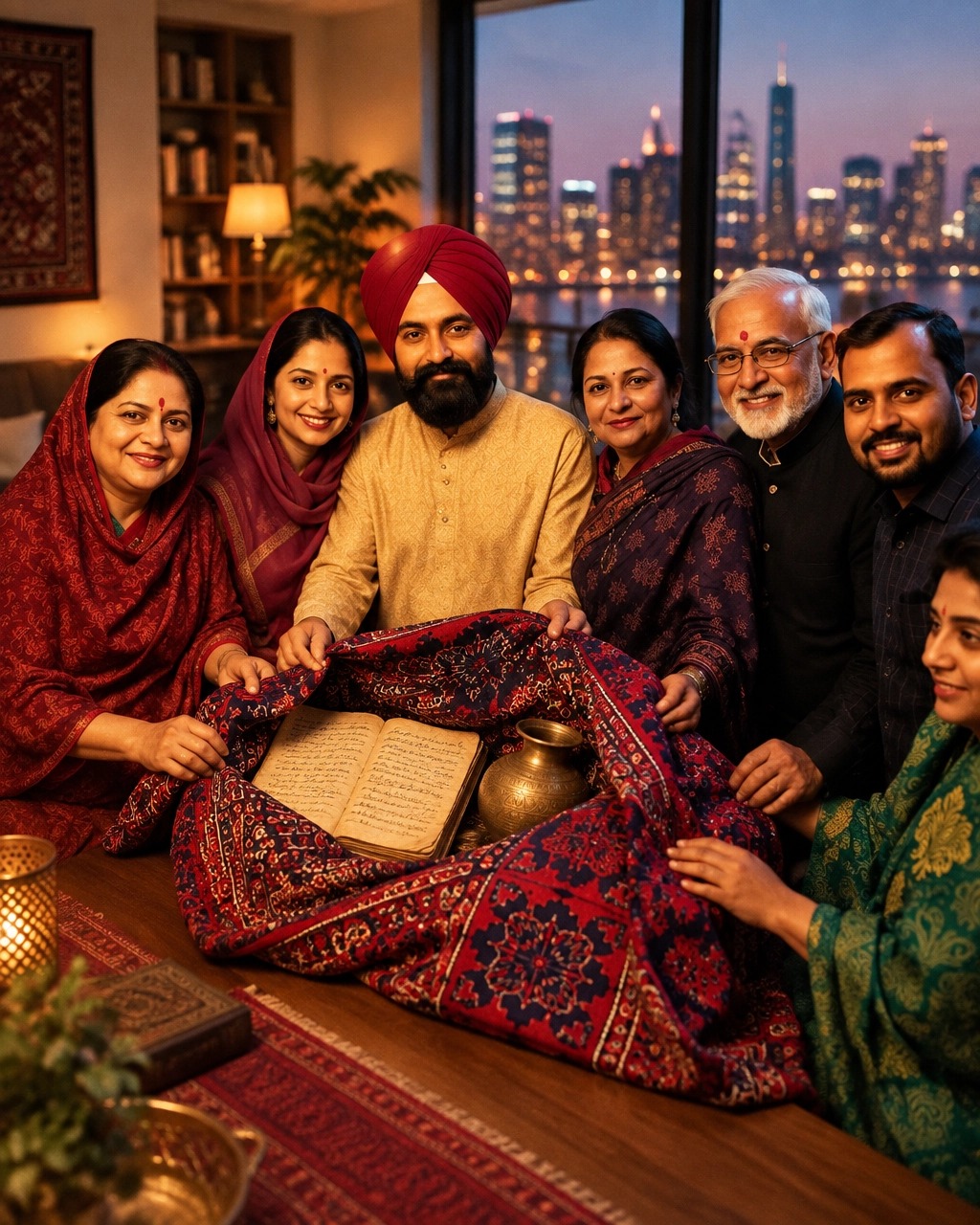
Ajrak unfolds at a celebration. A family recipe crosses three generations. A child learns the Sindhi alphabet on a video call. A song returns at a wedding. A story is translated, but not surrendered.
This is the living question at the heart of Sindhi culture: how do we preserve what changes? Nostalgia looks backward; heritage looks both ways. A heritage that cannot adapt becomes an artifact. A heritage that adapts with intention becomes a future.
Coda · The River Continues
The story of Sindhi history spans at least five millennia of remembered civilization, documented transformation, migration, and renewal. That scale can feel impossible to hold, so we hold it in fragments: a seal, a poem, a textile, a family name, a dish prepared from memory, a word spoken by someone born far from the Indus.
The Indus Valley gave us an ancient horizon. Buddhism and Hinduism shaped early spiritual landscapes. Islam and Sufism deepened the region’s devotional vocabulary. Colonial rule reshaped its institutions. Partition scattered families and redrew the political world. Still, the story did not break. It traveled. It settled. It began again.
Continue through the chapters: Ancient Origins, The Great Exile, A Borderless Nation, and Living Heritage. You can also read our pillar guide to who the Sindhi people are.
We began beside the river. We crossed the world. We are still becoming.