Sindhi Traditions That Survived Exile
Hospitality, Jhulelal, Cheti Chand, Chaliho, reverence for elders and food as memory — the Sindhi traditions that outlived the loss of a homeland.
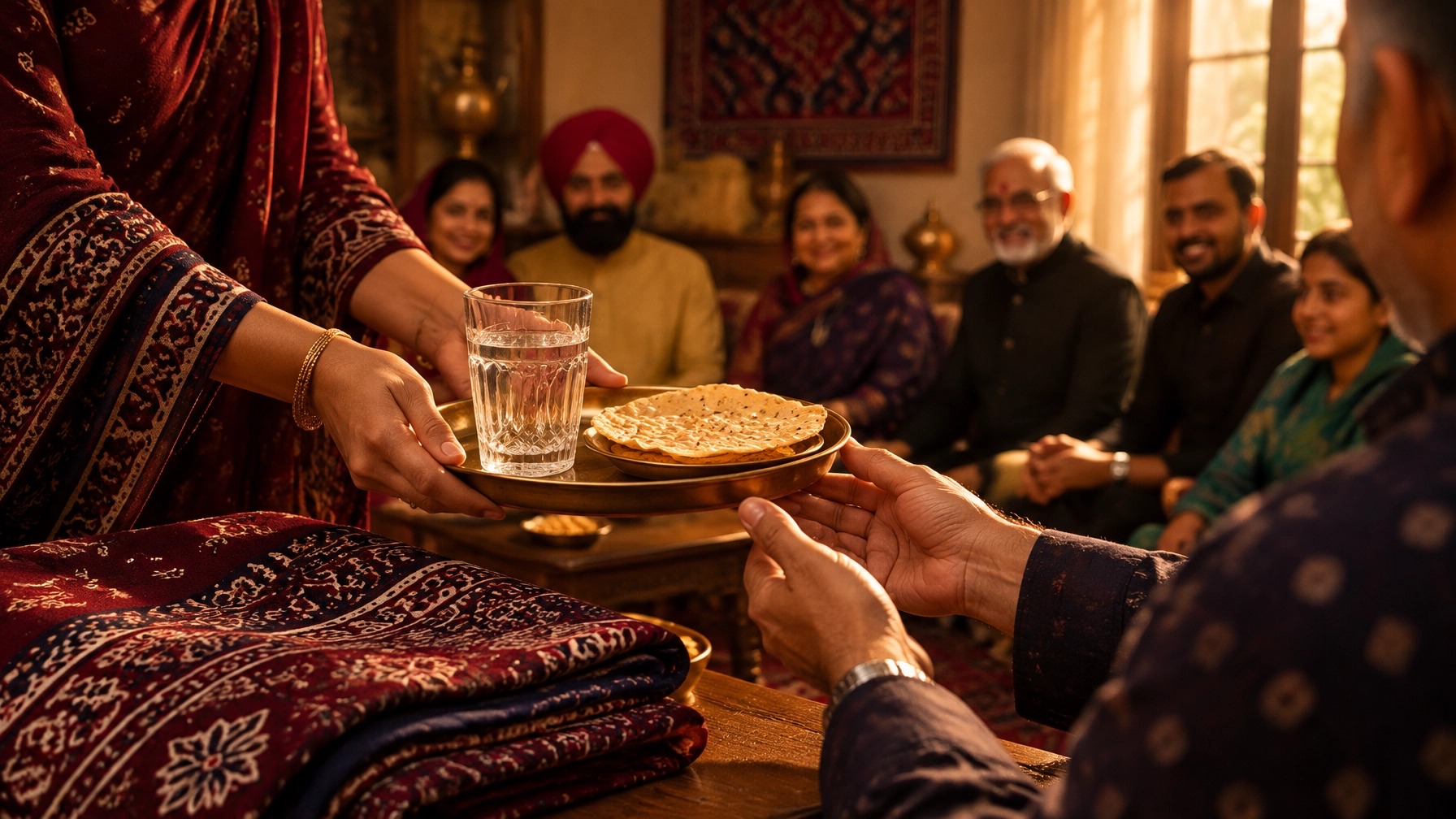
When a community loses its land, the question is not what it kept in its luggage. It is what it kept in its habits.
Water first
Walk into a Sindhi home anywhere in the world and water arrives before conversation. It is the oldest reflex we have — a river people's manners, practised in flats far from any river. Hospitality is not decoration in Sindhi households; it is the first rule. Guests are fed before the family eats, and nobody leaves without being asked twice to stay.

Jhulelal, Cheti Chand and Chaliho
Jhulelal, honoured as the protector of the waters, remained the community's anchor after 1947 precisely because he needed no territory. Cheti Chand — the Sindhi new year — is celebrated with processions, prayer and shared meals from Mumbai to London. Chaliho, the forty-day observance of thanksgiving and austerity, is still kept in families that no longer live anywhere near the Indus. A festival travels lighter than a temple.
Reverence for elders
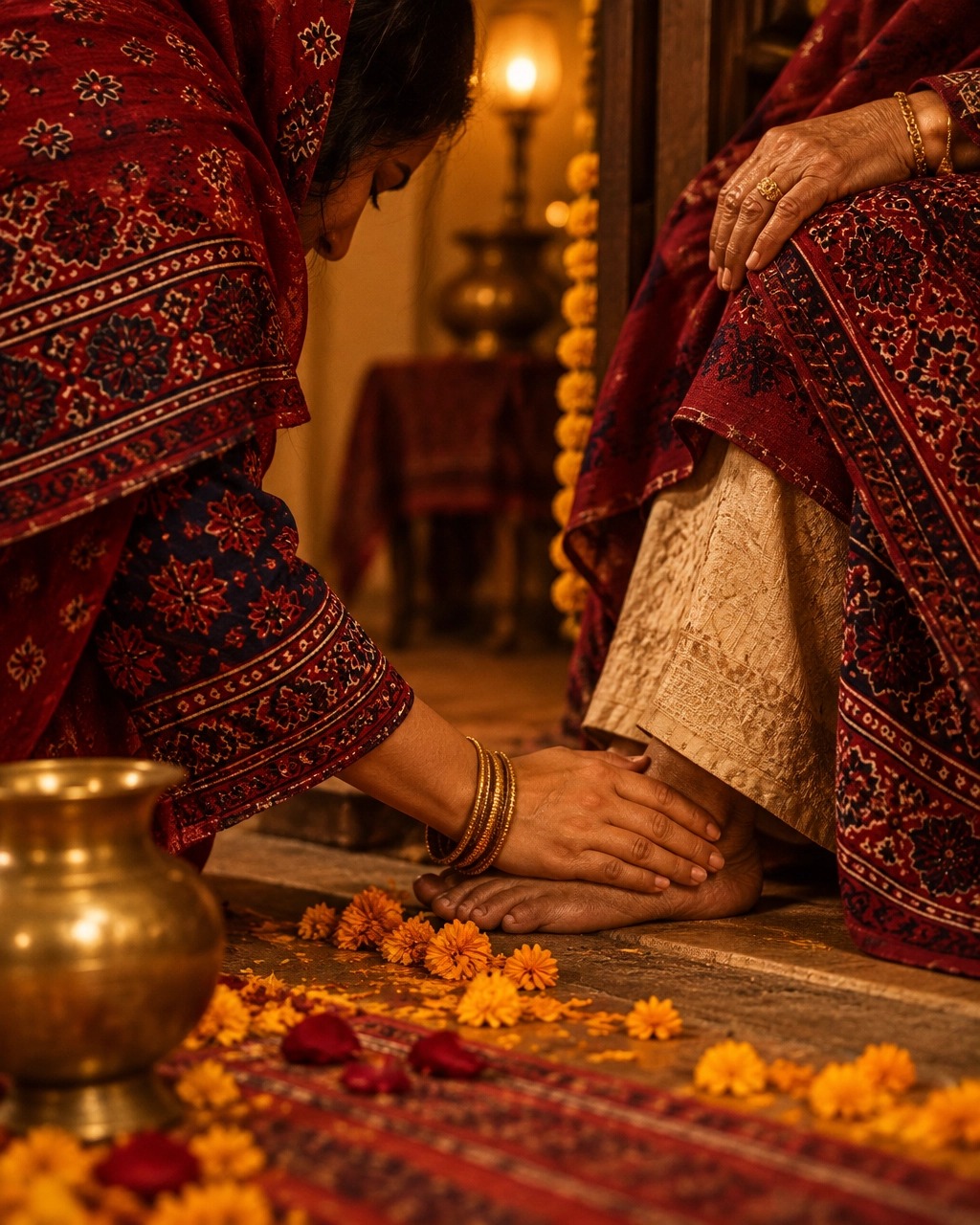
In the years after Partition, elders were the archive. They held the names of neighbourhoods that no longer belonged to us, the pronunciation of words, the sequence of rituals, the exact way a dish should smell before the next step. That authority persists in the small courtesies of a Sindhi household — touching feet, waiting to be served, the assumption that the grandmother decides what a wedding requires.
Food as archive
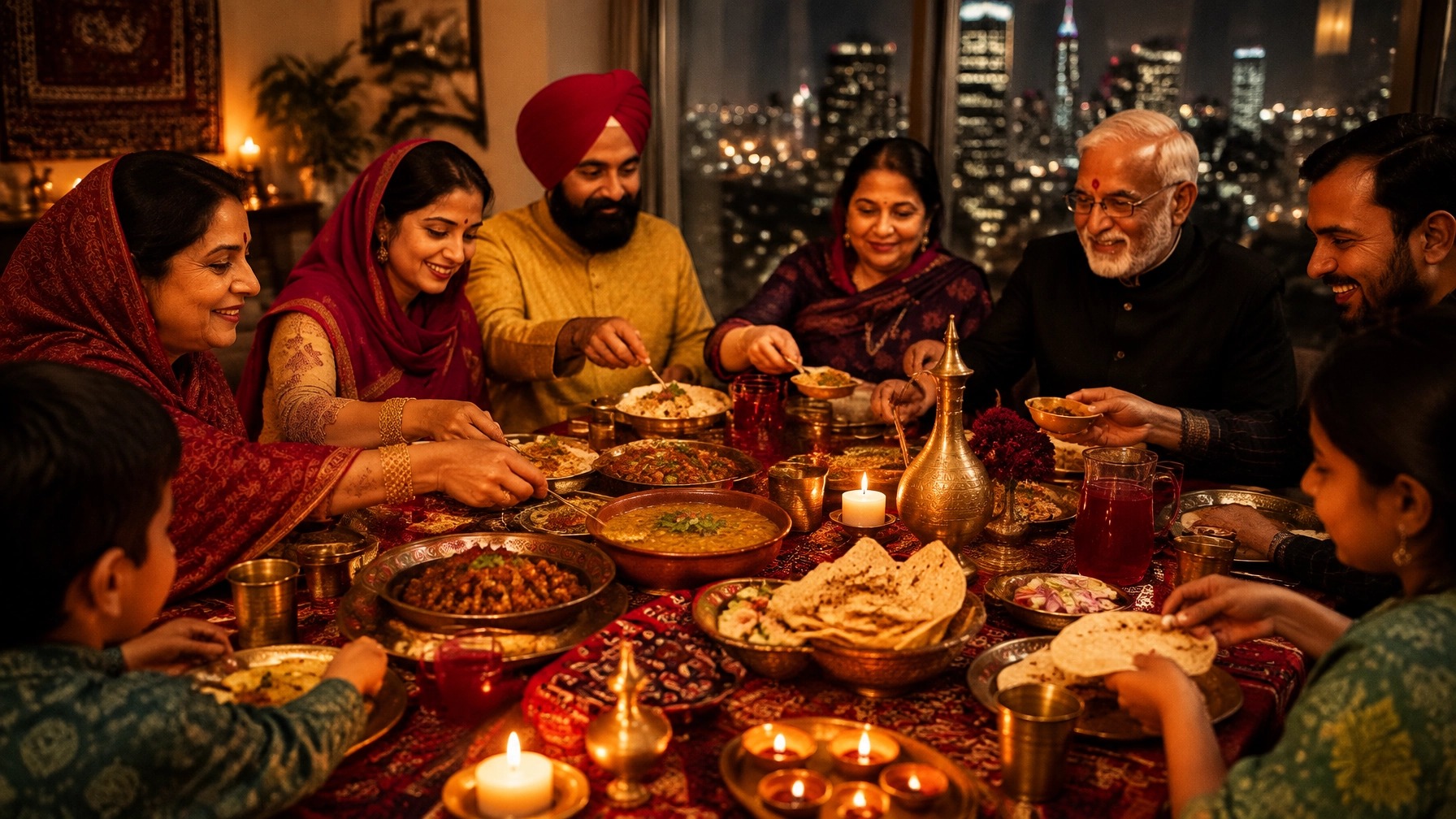
Sai bhaji on a Sunday. Koki wrapped for a journey. Dal pakwan when relatives arrive without warning. Each dish carries an instruction set that was never written down: wash the greens first, do not rush the koki, taste before serving, feed the guest before yourself. This is a curriculum disguised as a meal — see our guide to Sindhi food.
Culture you can carry
Ajrak folded into a suitcase. A lada song remembered by ear. A phrase an elder repeats until a child says it back. These are portable practices, and portability is exactly why they survived exile when houses, shops and schools did not. Read The Great Exile for what was lost, and Living Heritage for what came after.
A tradition survives when someone bothers to perform it again. Tell us which one your family kept.