The Sindhi Wedding: Rituals That Weave Two Families Together
Misri, Berana, mehendi, lada songs, the palla and the pheras — inside the Sindhi wedding and how its rituals still bind families across the diaspora.
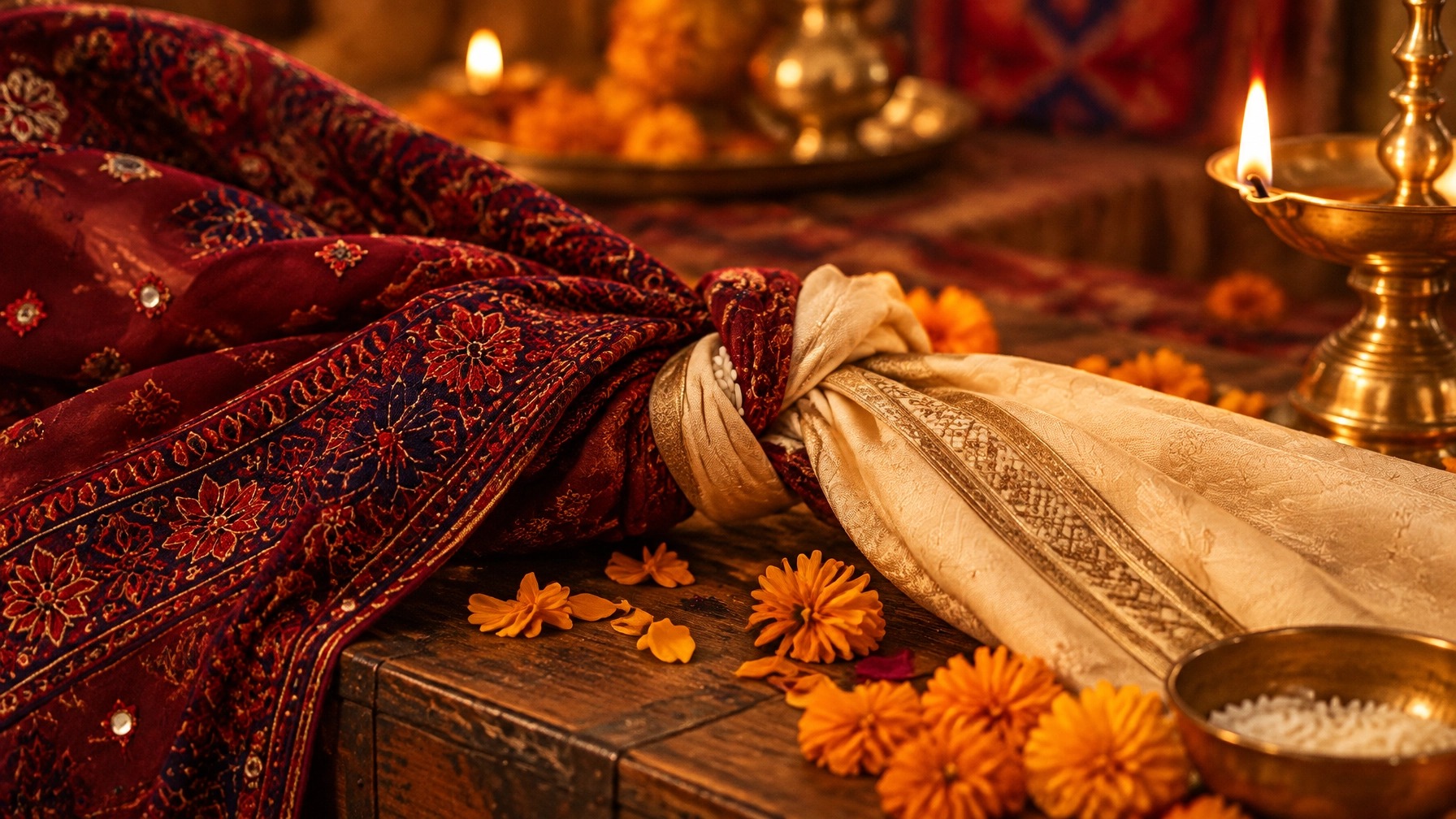
A Sindhi wedding is not a single evening. It is a sequence — days of small ceremonies, each one binding two families a little tighter before the couple ever circles the fire.
Misri: the promise made in sugar
Many Sindhi weddings begin with Kacchi Misri, an informal understanding between the families, followed by Pakki Misri, the formal engagement. Rock sugar — misri — is exchanged and shared, so that the first thing the two families taste together is sweetness. It is a small gesture with a large meaning: the agreement is not a contract but a hospitality.
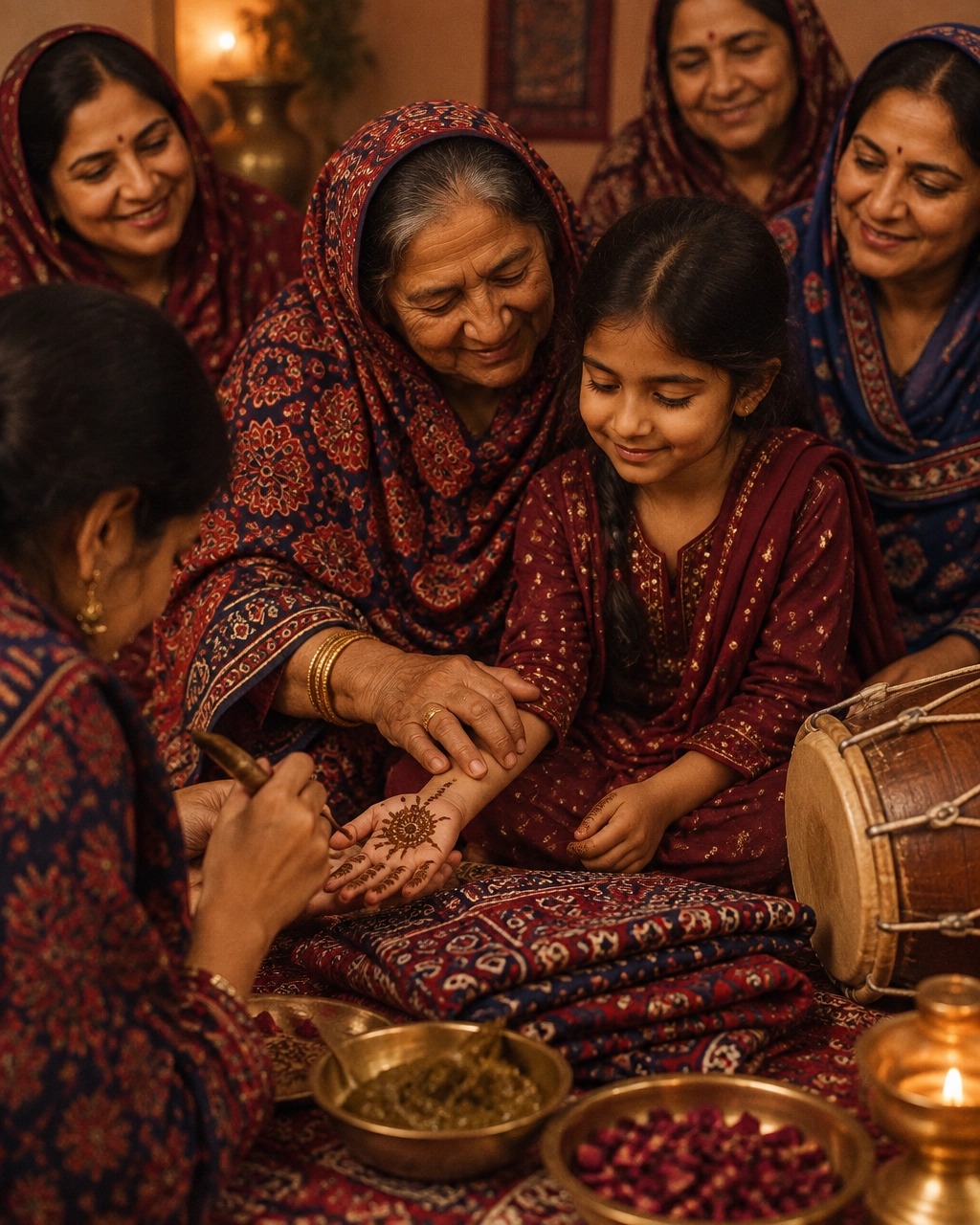
Berana, mehendi and the songs called lada
In the days that follow come the pre-wedding gatherings — Berana, the ceremonial invocation and blessing; the mehendi night with its henna and its teasing; and everywhere, lada, the Sindhi wedding songs. Lada are sung by women, often without instruments, passed from grandmother to granddaughter. They bless, they tease the in-laws, they narrate the marriage before it happens. Where the language has thinned in a family, the songs are often the last fluent Sindhi in the house.
The palla and the pheras
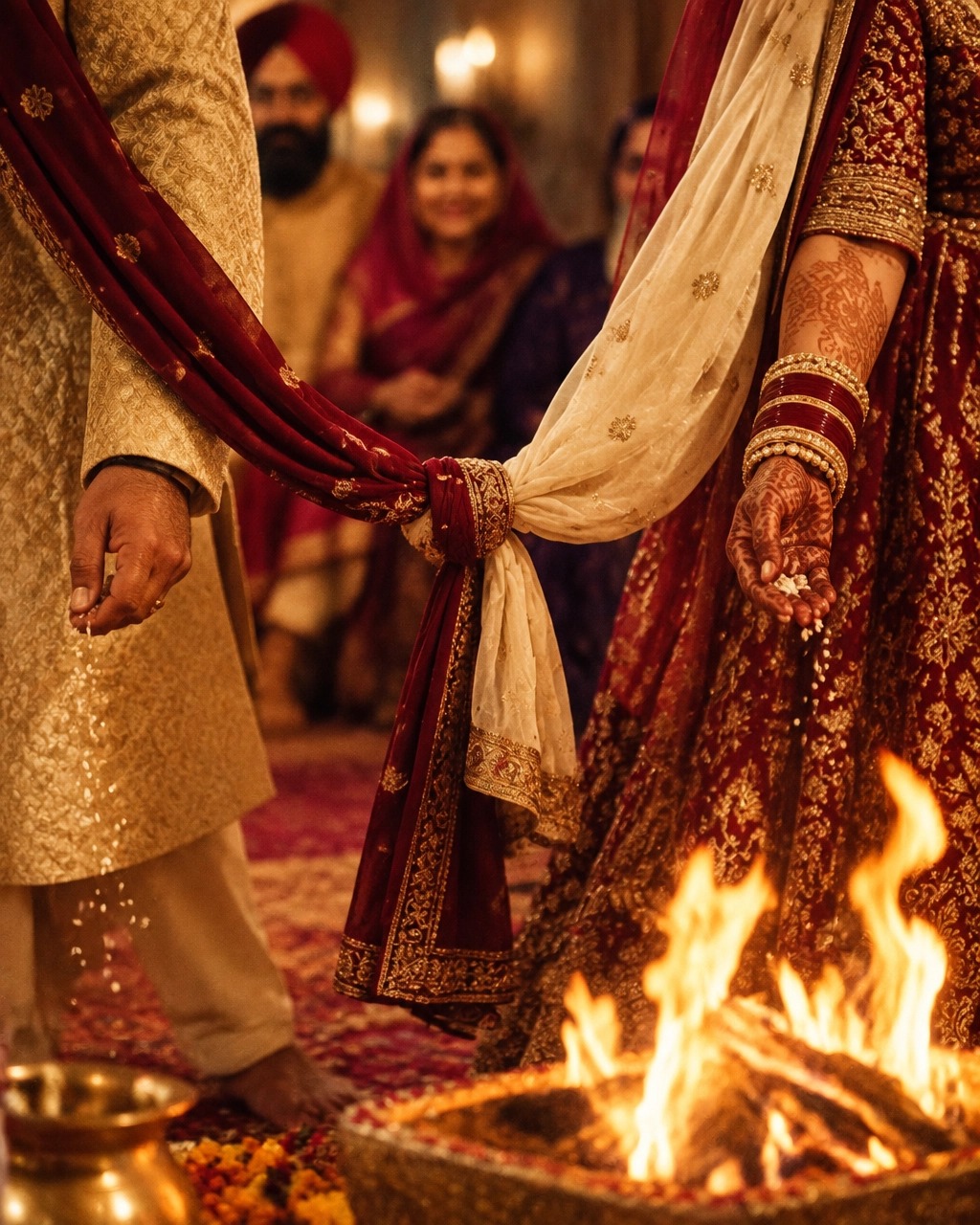
At the ceremony, the couple is joined by the palla — the knotted end of the bride's dupatta tied to the groom's shawl, the literal thread of the marriage. They then circle the sacred fire. Sindhi tradition commonly observes four pheras, though families vary, and many follow the seven rounds shared with wider North Indian practice. The variation is not a flaw. It is the record of a community that has lived in many places and taken something from each.
Food, Ajrak and the crowded house
Around the rituals is the part nobody plans and everybody remembers: the crowded house. Relatives arriving from three continents. Ajrak folded and offered as a mark of honour. Pots that never empty — sai bhaji, dal pakwan, mithai carried in from the same shop the family has used for forty years. Read more about Sindhi food and its role in gatherings.
Continuity in the diaspora
A Sindhi wedding in New Jersey or Dubai looks different from one in Ulhasnagar in 1960 — shorter, tighter, arranged around flights and work calendars. Yet the misri is still shared, the palla is still tied, the lada are still sung, often from a phone screen held by an aunt who learned them by ear. The ceremony compresses. The meaning does not.
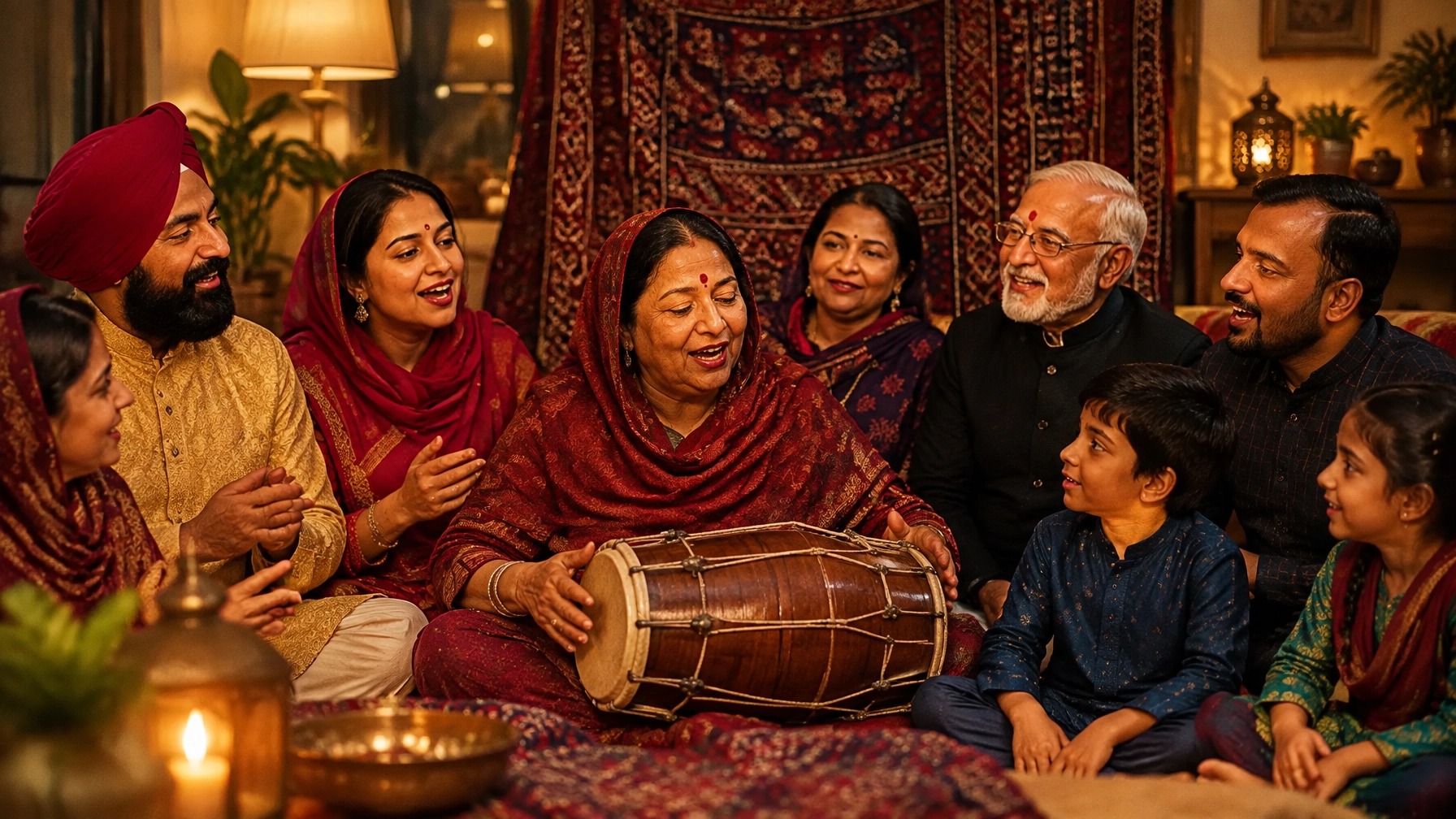
These rituals are how a scattered people keep introducing itself to the next generation. Tell us about your family's wedding — the songs, the food, the arguments over the pheras.